

Metaphor for Existentialism Powerful Examples
literaryguidz.com >> Uncategorized>> Metaphor for Existentialism Powerful Examples
Metaphor for Existentialism Powerful Examples
Existentialism can be hard to explain because it asks some of life’s biggest questions: Why are we here? What makes life meaningful? Are we truly free to choose and what happens when there is no clear answer? A powerful metaphor can make these abstract ideas much easier to understand.
One of the strongest images is life is an unmarked road. You have a starting point, you face real limits and you cannot see every turn ahead, yet you still have to choose which way to go. That captures a central existential idea: we must live and make choices even when life does not hand us a perfect map.
Other metaphors, such as a blank canvas a ship without a map a maze or a clock running down can highlight different parts of existentialism including freedom uncertainty responsibility identity and mortality.
These comparisons are useful in philosophy essays literature poetry classroom discussions and everyday conversations because they turn difficult ideas into images we can picture. In this guide we’ll explore the strongest metaphors for existentialism and explain exactly what each one means.
A metaphor for comparison that makes the complex ideas of existentialist philosophy easier to understand. Existentialism focuses on human life, freedom, choice, responsibility, uncertainty, identity, and the search for meaning.
| Term | Simple meaning |
|---|---|
| Existentialism | A family of philosophies focused on human existence, freedom, choice, responsibility, and meaning. |
| Existential metaphor | A comparison that makes an existential idea easier to picture. |
| Absurdity | The tension between our desire for meaning and a world that does not provide a guaranteed answer. |
| Freedom | The ability and burden of making choices within real limits. |
| Authenticity | Living in a way that honestly owns your choices instead of simply following the crowd. |
| Responsibility | Accepting that your choices and actions are yours to answer for. |
| Bad faith | Self-deception about freedom, responsibility, or one’s situation. |
| Angst/anxiety | The unsettling feeling that comes from confronting freedom, uncertainty, and existence. |
| Mortality | Awareness that human life is limited by death. |
| Meaning | Significance created, discovered, chosen, or lived through human projects and commitments. |
Quick takeaway: existentialism is not simply “life is meaningless.”
Why We Use Metaphor for Existentialism
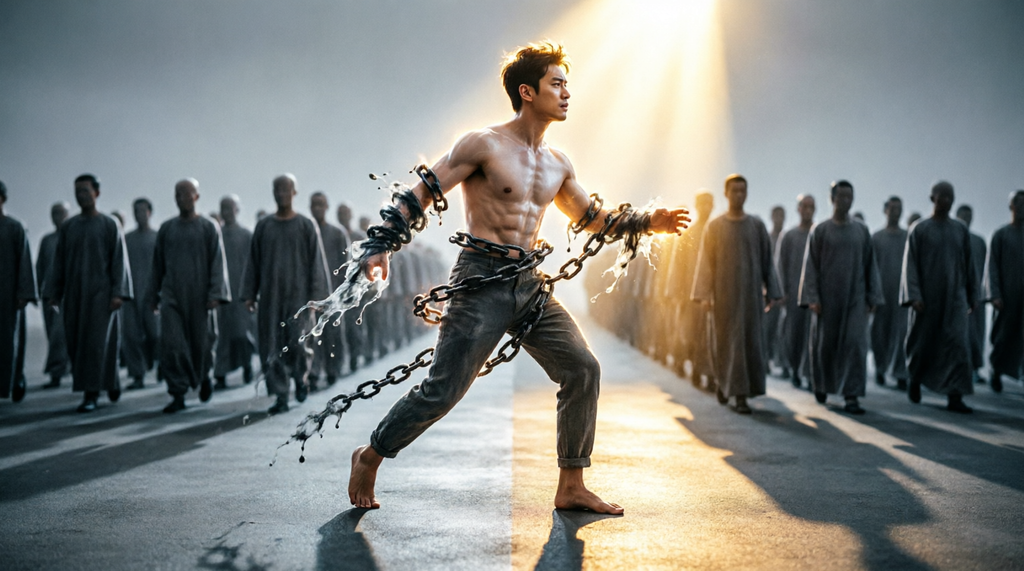
A metaphor for existentialism helps people understand an abstract philosophical problem through an ordinary image.
Practical purpose
Metaphors turn invisible ideas into pictures.
“Life is a blank canvas.”
The canvas represents an open future. The person holding the brush represents the individual who must choose what to create.
Everyday usage
- difficult life choices
- career changes
- identity
- uncertainty about the future
- personal responsibility
- finding purpose
- fear of death
- feeling lost
- refusing to follow the crowd
Writing
“Humans must construct meaning under uncertain conditions.”
You might write:
“We build a lighthouse while sailing through a dark sea.”
The second version gives the reader something to see.
Speaking
In conversation, a metaphor can make philosophy less intimidating:
“I think existentialism is like being given a road map with no destination marked.”
School
Students can use existential metaphors in:
- philosophy essays
- literature analysis
- personal reflections
- creative writing
- presentations
- book reports
Social media
Short metaphors can also express existential thoughts in a memorable way:
“Maybe life is a question we answer by living.”
Professional communication
Existential metaphors can work in speeches, leadership writing, personal-development essays, and discussions about change. They should usually be simple and purposeful rather than overly dramatic.
Pro tip: A metaphor should clarify the idea, not replace the explanation. After using one, explain what each part represents.
60 Metaphors for Existentialism
The Blank Canvas
Meaning: Existentialism can be pictured as a blank canvas because the future is not completely painted for us.
Real explanation: The canvas represents possibility. The person holding the brush represents an individual making choices. Existentialist thought often emphasizes that people participate in creating who they become rather than simply discovering a completely fixed identity.
Sample sentence: “Existence is a blank canvas, and every choice adds another stroke.”
When to use it: Use it when explaining freedom, possibility, creativity, or self-creation.
When NOT to use it: Avoid it when discussing situations where a person has almost no meaningful choice.
Alternatives: open canvas; unfinished painting; empty page.
Difficulty: Easy
Tone: Neutral
The Unmarked Road
Life can be seen as an unmarked road because there is not always one guaranteed path telling us where to go.
The road represents existence, while the lack of signs represents uncertainty. We still have to make decisions even when the destination is unclear.
Sample sentence: “Existentialism sees life as an unmarked road where every turn becomes a choice.”
Essays about uncertainty and decision-making.
Avoid suggesting that existentialism means people have unlimited freedom.
Alternatives: unknown path; road without signs; unexplored route.
Difficulty: Easy
Tone: Neutral
The Ship Without a Fixed Map
Meaning: Existential life resembles a ship sailing without a map that guarantees the final destination.
Real explanation: The ship represents a person, the sea represents existence, and the missing map represents the lack of a guaranteed universal answer.
Sample sentence: “We are sailors crossing a sea that gives us no perfect map.”
When to use it: Great for explaining uncertainty and responsibility.
When NOT to use it: Do not imply that existentialists believe knowledge is impossible.
Alternatives: unmapped voyage; uncertain journey; open sea.
Difficulty: Easy
Tone: Neutral
The Blank Page
Meaning: A blank page represents a life that is still being written.
Real explanation: The metaphor highlights action. Your past may already contain words, but future pages remain open to new decisions.
Sample sentence: “Existence is a blank page, but we still have to pick up the pen.”
When to use it: Personal essays and student writing.
When NOT to use it: Avoid it if you need to emphasize social or physical limits.
Alternatives: unfinished story; empty notebook; unwritten chapter.
Difficulty: Easy
Tone: Neutral
The Open Door
Meaning: An open door represents possibility and the need to choose whether to walk through it.
Real explanation: Freedom is not only having options. It also involves deciding what to do with them.
Sample sentence: “Existence leaves the door open, but it does not choose the room for us.”
When to use it: Explaining freedom and choice.
When NOT to use it: Avoid it when discussing unavoidable events.
Alternatives: open gate; available path; doorway to possibility.
Difficulty: Easy
Tone: Neutral
The Mirror
Meaning: The mirror represents the uncomfortable process of facing yourself honestly.
Real explanation: Existentialism often asks people to confront their choices rather than hide behind excuses or social expectations.
Sample sentence: “Existential thought holds up a mirror and asks who is responsible for the person looking back.”
When to use it: Authenticity and self-reflection.
When NOT to use it: It is weaker for explaining social structures or historical limits.
Alternatives: honest reflection; inner mirror; self-examination.
Difficulty: Easy
Tone: Neutral
The Maze
Meaning: Life can resemble a maze because people must make choices without always knowing which route leads somewhere meaningful.
Real explanation: The maze captures uncertainty and confusion. Unlike a simple puzzle, existential life does not promise one correct exit.
Sample sentence: “Existence is a maze where the search for meaning becomes part of the journey.”
When to use it: Anxiety and uncertainty.
When NOT to use it: Avoid suggesting that life necessarily has a hidden exit.
Alternatives: labyrinth; confusing path; tangled journey.
Difficulty: Easy
Tone: Neutral
The Lighthouse We Build
Meaning: A lighthouse we build ourselves represents creating guidance when no guaranteed guide is available.
Real explanation: The metaphor emphasizes meaning as something people can establish through values, relationships, and projects.
Sample sentence: “When the sea offers no lighthouse, we may have to build one.”
When to use it: Meaning and purpose.
When NOT to use it: Do not present this as the single definition of all existentialism.
Alternatives: self-made compass; personal beacon; chosen light.
Difficulty: Medium
Tone: Poetic
The Question Mark
Meaning: The question mark represents the uncertainty at the heart of existential questioning.
Real explanation: Existentialism does not simply hand readers a final answer. It asks them to confront questions about existence and how they should live.
Sample sentence: “Existence begins with a question mark rather than an instruction manual.”
When to use it: Introductions and philosophical essays.
When NOT to use it: Avoid making existentialism sound like pure confusion.
Alternatives: unanswered question; open question; mystery.
Difficulty: Easy
Tone: Neutral
The Unfinished Sculpture
Meaning: A person can be compared with an unfinished sculpture because identity develops through choices and actions.
Real explanation: The sculpture is never completely finished while life continues.
Sample sentence: “We are unfinished sculptures, shaped by decisions we keep making.”
When to use it: Identity and self-creation.
When NOT to use it: Avoid suggesting that people can freely shape every part of themselves.
Alternatives: work in progress; unfinished artwork; evolving form.
Difficulty: Easy
Tone: Neutral
The Coin in the Air
Meaning: A coin spinning in the air represents uncertainty before a choice produces a result.
Real explanation: It captures the tension of not knowing what will happen while still having to wait for reality to unfold.
Sample sentence: “The future hangs like a coin in the air until our choices bring it down.”
When to use it: Uncertainty and consequences.
When NOT to use it: Avoid it when discussing long-term deliberate action.
Alternatives: uncertain outcome; suspended decision; turning point.
Difficulty: Easy
Tone: Informal
The Open Chessboard
Meaning: An open chessboard represents a world where choices create new possibilities and consequences.
Real explanation: The metaphor shows that action matters, but it also avoids claiming complete freedom because every move occurs within existing conditions.
Sample sentence: “Existence is an open chessboard, but the pieces we receive are not all chosen by us.”
When to use it: Freedom within limits.
When NOT to use it: Avoid implying life is completely predictable like chess.
Alternatives: game of choices; strategic board; unfolding game.
Difficulty: Medium
Tone: Neutral
The Tightrope
Meaning: A tightrope represents the balance between freedom, responsibility, uncertainty, and limitation.
Real explanation: Human beings make choices while facing risks they cannot fully control.
Sample sentence: “Existence feels like walking a tightrope between freedom and uncertainty.”
When to use it: Anxiety and responsibility.
When NOT to use it: Avoid it if you want a hopeful, creative image.
Alternatives: narrow bridge; delicate balance; risky path.
Difficulty: Easy
Tone: Dramatic
The Garden
Meaning: Life can be seen as a garden that requires choices, care, and responsibility.
Real explanation: Meaning is represented by what someone chooses to cultivate. The garden also reminds us that conditions affect what can grow.
Sample sentence: “A meaningful life is less like finding a treasure and more like tending a garden.”
When to use it: Meaning, relationships, and projects.
When NOT to use it: It may be too gentle for existential anxiety.
Alternatives: cultivated life; personal garden; growing life.
Difficulty: Easy
Tone: Warm
The Fire We Tend
Meaning: A fire represents meaning that must be actively maintained.
Real explanation: The image suggests that meaning can fade when ignored, but it can also be strengthened through commitment and action.
Sample sentence: “Meaning is a fire we tend rather than a treasure we simply find.”
When to use it: Purpose and commitment.
When NOT to use it: Avoid implying that meaning is always under conscious control.
Alternatives: inner flame; living fire; personal spark.
Difficulty: Easy
Tone: Poetic
The Suitcase
Meaning: A suitcase represents the past we carry while still choosing where to go.
Real explanation: Existential freedom does not erase history. People make choices within circumstances they did not completely choose.
Sample sentence: “We choose our direction while carrying a suitcase packed by the past.”
When to use it: Facticity, history, and freedom.
When NOT to use it: Avoid saying people can simply unpack every past limitation.
Alternatives: baggage; inherited load; carried past.
Difficulty: Easy
Tone: Neutral
The Costume
Meaning: A costume represents an identity someone wears to satisfy other people’s expectations.
Real explanation: This metaphor works especially well for existential ideas about conformity and inauthenticity.
Sample sentence: “Sometimes we wear a costume so long that we forget we chose to put it on.”
When to use it: Authenticity and social pressure.
When NOT to use it: Avoid blaming people for every social role they occupy.
Alternatives: mask; role; social costume.
Difficulty: Easy
Tone: Neutral
The Mask
Meaning: The mask represents hiding behind an identity instead of honestly facing one’s freedom and responsibility.
Real explanation: It can illustrate bad faith, especially when someone treats a social role as if it completely determines who they are.
Sample sentence: “Existentialism asks whether the mask has become more important than the person beneath it.”
When to use it: Sartrean themes and authenticity.
When NOT to use it: Do not claim every social role is fake.
Alternatives: disguise; public face; false front.
Difficulty: Easy
Tone: Neutral
The Cage With an Open Door
Meaning: A cage with an open door represents limited freedom.
Real explanation: The image is useful because existential freedom does not mean having infinite options. Circumstances can constrain us while leaving some room for choice.
Sample sentence: “Existence can feel like a cage with one door still open.”
When to use it: Situated freedom and limitation.
When NOT to use it: Avoid treating serious oppression as merely a personal mindset.
Alternatives: limited freedom; constrained choice; narrow opening.
Difficulty: Medium
Tone: Serious
The Clock
Meaning: A clock represents mortality and the limited time available to live.
Real explanation: Awareness of death can make ordinary choices feel more urgent.
Sample sentence: “The clock reminds us that every choice is made inside a limited life.”
When to use it: Mortality and urgency.
When NOT to use it: Avoid making existentialism sound obsessed only with death.
Alternatives: ticking clock; countdown; limited time.
Difficulty: Easy
Tone: Serious
The Hourglass
Meaning: The hourglass represents time running out.
Real explanation: Unlike a normal clock, the falling sand makes mortality visible.
Sample sentence: “Existence is an hourglass, and awareness of the falling sand changes how we value each moment.”
When to use it: Poetry and reflective writing.
When NOT to use it: Avoid using it repeatedly because it can become melodramatic.
Alternatives: fading sand; countdown; passing time.
Difficulty: Easy
Tone: Poetic
The Candle
Meaning: A candle represents a temporary human life.
Real explanation: The flame gives light but does not last forever, making it a useful image for mortality and meaning.
Sample sentence: “Our lives are candles, brief enough to make the light matter.”
When to use it: Mortality and purpose.
When NOT to use it: Avoid implying that death makes life worthless.
Alternatives: brief flame; temporary light; living flame.
Difficulty: Easy
Tone: Poetic
The Echo
Meaning: An echo represents the traces our actions leave after a moment has passed.
Real explanation: The image works for questions about responsibility, legacy, and the effects of choice.
Sample sentence: “Every choice sends an echo farther than the moment in which it was made.”
When to use it: Responsibility and consequences.
When NOT to use it: Avoid claiming every action has a huge lasting effect.
Alternatives: ripple; aftereffect; lingering voice.
Difficulty: Easy
Tone: Neutral
The Ripple
Meaning: A ripple represents how one choice can affect other people and future events.
Real explanation: Existential freedom has an ethical side because our choices do not happen in isolation.
Sample sentence: “A choice is a stone dropped into water; its ripples reach beyond the person who threw it.”
When to use it: Ethics and responsibility.
When NOT to use it: Avoid assuming every consequence is predictable.
Alternatives: ripple effect; chain reaction; spreading effect.
Difficulty: Easy
Tone: Neutral
The Seed
Meaning: A seed represents a possibility that becomes something through action and care.
Real explanation: The metaphor captures potential without suggesting that growth is guaranteed.
Sample sentence: “A choice is a seed; what grows from it depends on both action and circumstance.”
When to use it: Personal growth and projects.
When NOT to use it: Avoid promising that effort always produces success.
Alternatives: beginning; potential; planted possibility.
Difficulty: Easy
Tone: Positive
The River
Meaning: A river represents existence as movement rather than a fixed state.
Real explanation: The river changes while still having a recognizable course. This makes it useful for discussing identity and time.
Sample sentence: “Existence is a river, always moving beyond the person we were yesterday.”
When to use it: Change and identity.
When NOT to use it: Avoid suggesting life has one predetermined direction.
Alternatives: flowing life; current; moving journey.
Difficulty: Easy
Tone: Poetic
The Crossroads
Meaning: A crossroads represents a moment when a person must choose among different possible paths.
Real explanation: It is one of the clearest metaphors for existential decision-making.
Sample sentence: “Existence places us at crossroads where waiting can become a choice too.”
When to use it: Decisions and responsibility.
When NOT to use it: Avoid implying every ordinary moment is a dramatic crossroads.
Alternatives: turning point; fork in the road; choice point.
Difficulty: Easy
Tone: Neutral
The Compass Without North
Meaning: A compass without a clear north represents uncertainty about ultimate values.
Real explanation: The traveler still has to decide how to move even when there is no unquestionable direction.
Sample sentence: “Existence gives us a compass that points nowhere unless we decide what matters.”
When to use it: Meaning and uncertainty.
When NOT to use it: Avoid claiming existentialism rejects all values.
Alternatives: uncertain compass; directionless guide; broken compass.
Difficulty: Medium
Tone: Poetic
The Map We Draw While Walking
Meaning: The map represents meaning and direction created through lived choices.
Real explanation: We often understand our path by looking backward at decisions that have already shaped us.
Sample sentence: “We draw the map of our lives while walking across the land.”
When to use it: Self-creation and reflection.
When NOT to use it: Avoid suggesting people control every external event.
Alternatives: self-made map; unfolding route; lived map.
Difficulty: Easy
Tone: Neutral
The House We Keep Renovating
Meaning: The house represents identity, while renovation represents continued self-creation.
Real explanation: We may inherit rooms, walls, and foundations, but we can still change how we live in the structure.
Sample sentence: “The self is a house we inherit partly built and keep renovating.”
When to use it: Identity and personal change.
When NOT to use it: Avoid implying all circumstances can be remodeled.
Alternatives: unfinished house; changing home; evolving structure.
Difficulty: Medium
Tone: Neutral
The Book With No Final Chapter
Meaning: The book represents a life whose story is unfinished until death.
Real explanation: The metaphor emphasizes that identity is still developing.
Sample sentence: “We are books with no final chapter while we are still alive.”
When to use it: Identity and possibility.
When NOT to use it: Avoid suggesting life follows a neat story arc.
Alternatives: unfinished story; open narrative; incomplete book.
Difficulty: Easy
Tone: Neutral
The Story We Edit
Meaning: Life can be compared with a story that people continually reinterpret and revise.
Real explanation: We cannot erase everything that happened, but we can change how we understand it and what we do next.
Sample sentence: “Existence gives us old pages, but it also leaves room for revision.”
When to use it: Past, identity, and choice.
When NOT to use it: Avoid minimizing painful experiences.
Alternatives: revised story; personal narrative; changing account.
Difficulty: Easy
Tone: Neutral
The Theater Stage
Meaning: The stage represents social life, while the roles represent identities people perform.
Real explanation: This metaphor is useful for asking whether someone is living authentically or simply performing what others expect.
Sample sentence: “Existence is a stage where the hardest question is whether we chose our role.”
When to use it: Authenticity and social expectations.
When NOT to use it: Avoid suggesting all relationships are performances.
Alternatives: stage of life; social theater; performance.
Difficulty: Medium
Tone: Poetic
The Actor Who Forgets the Script Is Optional
Meaning: This metaphor represents a person who assumes social expectations completely determine their life.
Real explanation: Existential thought challenges automatic conformity.
Sample sentence: “The existential question begins when the actor wonders whether the script must really be followed.”
When to use it: Authenticity and conformity.
When NOT to use it: Avoid saying social rules never matter.
Alternatives: questioning the script; breaking the role; rewriting expectations.
Difficulty: Medium
Tone: Neutral
The Prison of Excuses
Meaning: Excuses can become a prison when a person uses them to deny responsibility.
Real explanation: The metaphor reflects existential criticism of hiding behind fixed labels or circumstances.
Sample sentence: “Sometimes the walls around us are strengthened by the excuses we refuse to question.”
When to use it: Responsibility and bad faith.
When NOT to use it: Never use it to blame people for circumstances beyond their control.
Alternatives: trap of excuses; self-made cage; responsibility barrier.
Difficulty: Medium
Tone: Serious
The Photograph
Meaning: A photograph represents a fixed image of the self.
Real explanation: Existentialism can challenge the idea that one photograph captures an entire living person.
Sample sentence: “A photograph can capture a moment, but it cannot imprison a person inside one identity.”
When to use it: Identity and change.
When NOT to use it: Avoid suggesting the past has no importance.
Alternatives: frozen image; snapshot; fixed identity.
Difficulty: Easy
Tone: Neutral
The Shadow
Meaning: The shadow represents uncertainty, fear, mortality, or parts of ourselves that we would rather avoid.
Real explanation: It can show how existential questioning brings uncomfortable truths into view.
Sample sentence: “Existential thought asks us to stop running from the shadow behind our choices.”
When to use it: Anxiety and self-examination.
When NOT to use it: Avoid making existentialism sound purely negative.
Alternatives: dark side; hidden fear; unseen burden.
Difficulty: Easy
Tone: Serious
The Storm
Meaning: A storm represents periods when certainty collapses and life becomes difficult to navigate.
Real explanation: Existential anxiety can feel like a storm because familiar answers no longer provide shelter.
Sample sentence: “Existential anxiety is a storm that shakes the comfortable answers we once trusted.”
When to use it: Anxiety and crisis.
When NOT to use it: Avoid equating existentialism with mental illness.
Alternatives: inner storm; crisis; turbulent season.
Difficulty: Easy
Tone: Dramatic
The Desert
Meaning: A desert represents a world that does not automatically provide comfort or meaning.
Real explanation: The empty landscape can symbolize the experience of searching for meaning without finding a ready-made answer.
Sample sentence: “The existential desert is wide, but the traveler can still choose how to cross it.”
When to use it: Absurdity and meaninglessness.
When NOT to use it: Avoid claiming existentialists simply believe life is empty.
Alternatives: empty landscape; barren road; wilderness.
Difficulty: Medium
Tone: Poetic
The Absurd Machine
Meaning: A machine that keeps running without explaining why represents the absurd.
Real explanation: The image captures the tension between human demands for explanation and a world that may not supply one.
Sample sentence: “The absurd machine keeps turning even when we ask what the machine is for.”
When to use it: Camus and absurdism.
When NOT to use it: Do not treat absurdism and all existentialism as identical.
Alternatives: meaningless mechanism; indifferent machine; strange system.
Difficulty: Medium
Tone: Philosophical
The Wheel That Keeps Turning
Meaning: The turning wheel represents repetition without a guaranteed final purpose.
Real explanation: It can be used to introduce the absurd, especially when everyday routines continue despite questions about meaning.
Sample sentence: “The wheel turns every morning, and we must decide why we keep walking beside it.”
When to use it: Routine and absurdity.
When NOT to use it: Avoid presenting routine itself as meaningless.
Alternatives: endless cycle; turning wheel; repeated motion.
Difficulty: Easy
Tone: Poetic
The Sisyphean Hill
Meaning: The hill represents repeated effort that seems to have no final completion.
Real explanation: This image is closely connected with Albert Camus’s discussion of Sisyphus. It is particularly useful for explaining absurdity.
Sample sentence: “The existential struggle can resemble pushing a stone uphill while knowing the hill will return tomorrow.”
When to use it: Camus, absurdity, and repetition.
When NOT to use it: Do not use it as a simple synonym for existentialism.
Alternatives: endless task; repeating struggle; uphill cycle.
Difficulty: Medium
Tone: Philosophical
The Locked Question
Meaning: A locked question represents a problem that may not have a final universal answer.
Real explanation: Existential philosophy often asks what we should do when certainty is unavailable.
Sample sentence: “The meaning of life can feel like a locked question, but we still have to live while searching.”
When to use it: Meaning and uncertainty.
When NOT to use it: Avoid implying philosophy has no useful answers.
Alternatives: unanswered mystery; closed question; open problem.
Difficulty: Easy
Tone: Neutral
The Empty Throne
Meaning: The empty throne represents the absence of a universally accepted authority that tells everyone what life must mean.
Real explanation: It is especially useful when discussing nihilism, secularization, or the loss of inherited certainty.
Sample sentence: “When the old throne of certainty is empty, people must decide how to live without its commands.”
When to use it: Nihilism and religious existentialism.
When NOT to use it: Avoid treating religious belief as simply irrational.
Alternatives: missing authority; vacant throne; absent ruler.
Difficulty: Medium
Tone: Serious
The Lost Instruction Manual
Meaning: Life resembles a device without an instruction manual.
Real explanation: The metaphor emphasizes the lack of a universal set of instructions that everyone can simply follow.
Sample sentence: “Existence gives us the machine but not a universal instruction manual.”
When to use it: Beginner explanations.
When NOT to use it: Avoid suggesting humans have no traditions, values, or moral resources.
Alternatives: missing guide; unwritten instructions; manual-less life.
Difficulty: Easy
Tone: Informal
The Question You Must Answer With Your Life
Meaning: Instead of answering existence only with words, a person answers through action.
Real explanation: This is one of the strongest metaphors for existential responsibility.
Sample sentence: “Some questions are answered less by what we say than by the lives we choose to live.”
When to use it: Essays and reflections.
When NOT to use it: Avoid suggesting philosophical reasoning is unnecessary.
Alternatives: lived answer; answer through action; life as response.
Difficulty: Medium
Tone: Reflective
The Key You Must Turn
Meaning: The key represents the moment of choice.
Real explanation: Possibility becomes action when a person decides.
Sample sentence: “Freedom is the key in your hand; possibility begins when you turn it.”
When to use it: Freedom and action.
When NOT to use it: Avoid claiming everyone has equal access to every door.
Alternatives: choice key; turning point; opening choice.
Difficulty: Easy
Tone: Neutral
The Door You Cannot Unopen
Meaning: Some choices change the future in ways that cannot be completely reversed.
Real explanation: The metaphor highlights responsibility and consequences.
Sample sentence: “Some decisions are doors we can walk back toward but never completely unopen.”
When to use it: Responsibility and irreversible choices.
When NOT to use it: Avoid fatalistic thinking.
Alternatives: irreversible choice; point of no return; lasting decision.
Difficulty: Medium
Tone: Serious
The Footprints in Snow
Meaning: Footprints represent choices that leave traces behind.
Real explanation: They show how past actions shape the path we can see, even while new steps remain possible.
Sample sentence: “Our choices leave footprints behind us, but the next step is still ahead.”
When to use it: Responsibility and personal history.
When NOT to use it: Avoid implying the future is determined by the past.
Alternatives: traces of choice; marks of action; path behind us.
Difficulty: Easy
Tone: Poetic
The Bridge Under Construction
Meaning: A bridge under construction represents a future that is being created while we move toward it.
Real explanation: It combines uncertainty with action.
Sample sentence: “Existence is a bridge we build while standing on it.”
When to use it: Change and self-creation.
When NOT to use it: Avoid suggesting planning is impossible.
Alternatives: unfinished bridge; building the way; emerging path.
Difficulty: Easy
Tone: Poetic
The Boat We Repair at Sea
Meaning: Life is like repairing a boat while already sailing.
Real explanation: People rarely receive perfect conditions before making important decisions. We act while life is already happening.
Sample sentence: “We repair the boat while sailing because waiting for perfect certainty means never leaving shore.”
When to use it: Uncertainty and practical responsibility.
When NOT to use it: Avoid encouraging reckless action.
Alternatives: sailing repair; unfinished vessel; life at sea.
Difficulty: Medium
Tone: Practical
The Backpack of Circumstance
Meaning: The backpack represents the conditions a person carries but did not fully choose.
Real explanation: It can represent family background, history, culture, social conditions, body, place, and other forms of facticity.
Sample sentence: “We choose our direction while carrying a backpack packed partly by circumstances.”
When to use it: Freedom within limits.
When NOT to use it: Do not use it to reduce complex social problems to personal effort.
Alternatives: burden of circumstance; inherited load; given conditions.
Difficulty: Medium
Tone: Serious
The Weather We Cannot Command
Meaning: Weather represents conditions outside personal control.
Real explanation: Existential freedom is not the same as controlling everything. We can choose responses without choosing every circumstance.
Sample sentence: “We cannot command the weather, but we can still decide how to sail.”
When to use it: Situational freedom.
When NOT to use it: Avoid using it to dismiss structural barriers.
Alternatives: uncontrollable conditions; outside forces; given situation.
Difficulty: Easy
Tone: Neutral
The Window
Meaning: A window represents the perspective through which a person experiences the world.
Real explanation: Different people can face the same situation while interpreting it differently.
Sample sentence: “Existence is partly the window through which we make sense of the world.”
When to use it: Perspective and meaning.
When NOT to use it: Avoid implying reality is only personal opinion.
Alternatives: viewpoint; lens; perspective.
Difficulty: Easy
Tone: Neutral
The Lens
Meaning: The lens represents the meanings and values through which people interpret experience.
Real explanation: The same event can receive different meanings depending on the person’s situation and commitments.
Sample sentence: “We do not simply experience the world; we look at it through lenses shaped by our lives.”
When to use it: Phenomenology and perspective.
When NOT to use it: Avoid confusing interpretation with changing facts.
Alternatives: viewpoint; frame; way of seeing.
Difficulty: Easy
Tone: Academic
The Soundtrack
Meaning: A soundtrack represents the meaning a person gives to events.
Real explanation: The same scene can feel different when accompanied by a different emotional interpretation.
Sample sentence: “The event may be the same, but the soundtrack we give it can change its meaning.”
When to use it: Creative writing and personal reflection.
When NOT to use it: Avoid suggesting people can simply choose away all pain.
Alternatives: emotional score; inner music; personal soundtrack.
Difficulty: Easy
Tone: Creative
The Photograph Album
Meaning: An album represents a collection of past identities rather than one permanent self.
Real explanation: It allows you to show that people change while still carrying their histories.
Sample sentence: “The self is an album of moments, not one photograph that explains everything.”
When to use it: Identity and memory.
When NOT to use it: Avoid denying continuity across a person’s life.
Alternatives: life album; collection of selves; memory book.
Difficulty: Easy
Tone: Neutral
The Riverbank
Meaning: The riverbank represents limits that shape movement without fully determining it.
Real explanation: A river cannot flow anywhere whatsoever, but it still moves within its course.
Sample sentence: “Circumstances are like riverbanks: they shape our movement without choosing every turn.”
When to use it: Freedom and constraint.
When NOT to use it: Avoid treating every limitation as natural or permanent.
Alternatives: boundary; channel; constraint.
Difficulty: Medium
Tone: Neutral
The Fence With a Gate
Meaning: A fence represents limits, while the gate represents available choices.
Real explanation: This metaphor makes a useful distinction between being constrained and having no freedom at all.
Sample sentence: “Existence gives us fences and gates, not an endless field with no boundaries.”
When to use it: Beginner explanations of situated freedom.
When NOT to use it: Avoid claiming every person has the same number of gates.
Alternatives: bounded field; limited options; guarded opening.
Difficulty: Easy
Tone: Neutral
The Old Photograph You Can Reframe
Meaning: The photograph represents the past; the frame represents interpretation.
Real explanation: You cannot change the event itself, but you can change how you understand it and what you do with it.
Sample sentence: “We cannot retake every photograph of our past, but we can sometimes change the frame.”
When to use it: Meaning and personal history.
When NOT to use it: Avoid implying reframing erases harm.
Alternatives: new perspective; changed frame; reinterpreted past.
Difficulty: Medium
Tone: Reflective
The Garden Path
Meaning: A garden path represents choices that become meaningful through repeated action.
Real explanation: A single choice matters, but a life is also shaped by patterns of commitment.
Sample sentence: “A life is a garden path worn into the ground by repeated choices.”
When to use it: Habits and values.
When NOT to use it: Avoid suggesting people can never change direction.
Alternatives: chosen path; repeated route; lived direction.
Difficulty: Easy
Tone: Neutral
The Questioning Traveler
Meaning: The traveler represents a person who keeps asking what kind of life is worth living.
Real explanation: The journey matters because existentialism is concerned with lived experience, not only abstract theory.
Sample sentence: “The existential person is a traveler who asks what makes the journey worth taking.”
When to use it: General explanations.
When NOT to use it: Avoid implying every existentialist is constantly unhappy.
Alternatives: searching traveler; reflective traveler; questioning wanderer.
Difficulty: Easy
Tone: Neutral
The Fire Escape
Meaning: A fire escape represents the sudden realization that ordinary life cannot always remain comfortable.
Real explanation: Existential crises can interrupt routine and force people to confront difficult questions.
Sample sentence: “An existential crisis can feel like discovering a fire escape in a building you thought you knew.”
When to use it: Existential crisis.
When NOT to use it: Avoid making crisis sound necessary for everyone.
Alternatives: emergency exit; sudden awakening; escape route.
Difficulty: Medium
Tone: Dramatic
The Alarm Clock
Meaning: An alarm clock represents a moment that wakes someone from automatic living.
Real explanation: Existential reflection can interrupt routines and make a person question what they are doing and why.
Sample sentence: “Existential anxiety can act like an alarm clock, waking us from comfortable routines.”
When to use it: Authenticity and self-awareness.
When NOT to use it: Avoid claiming ordinary routines are always inauthentic.
Alternatives: wake-up call; awakening; sudden realization.
Difficulty: Easy
Tone: Neutral
The Locked Room
Meaning: A locked room represents the feeling that a person has become trapped inside a fixed identity or worldview.
Real explanation: The metaphor becomes existential when the person begins questioning the walls themselves.
Sample sentence: “Existential reflection begins when we stop asking how to decorate the room and start asking why we believe it is locked.”
When to use it: Identity and self-questioning.
When NOT to use it: Avoid claiming every limitation is imaginary.
Alternatives: closed room; mental prison; fixed world.
Difficulty: Medium
Tone: Serious
The Door You Must Choose
Meaning: Multiple doors represent possibilities, while choosing one means accepting responsibility for an action.
Real explanation: The metaphor captures both freedom and anxiety.
Sample sentence: “Freedom is not simply having doors; it is facing the discomfort of choosing one.”
When to use it: Anxiety of choice.
When NOT to use it: Avoid exaggerating ordinary decisions.
Alternatives: choice of doors; branching options; decision point.
Difficulty: Easy
Tone: Neutral
The Unfinished Sentence
Meaning: An unfinished sentence represents a life that has not yet reached its final meaning.
Real explanation: Human identity remains open while future actions remain possible.
Sample sentence: “We are unfinished sentences, still changing the meaning of what came before.”
When to use it: Creative writing.
When NOT to use it: Avoid suggesting the past has no fixed consequences.
Alternatives: unfinished thought; open sentence; incomplete statement.
Difficulty: Easy
Tone: Poetic
The Pen in Your Hand
Meaning: The pen represents personal agency.
Real explanation: It emphasizes that people participate in shaping their lives through decisions, while the paper around the pen represents circumstances.
Sample sentence: “The pen is in our hands, even when the paper is already marked.”
When to use it: Freedom within constraints.
When NOT to use it: Avoid implying equal control over life circumstances.
Alternatives: hand-held pen; writing one’s path; author of choices.
Difficulty: Easy
Tone: Neutral
The Question Behind the Question
Meaning: Existentialism can be seen as looking beneath ordinary questions to ask what kind of life makes them meaningful.
Real explanation: “What job should I choose?” may hide a deeper question: “What kind of person do I want to become?”
Sample sentence: “Existential thinking searches for the question behind the question.”
When to use it: Philosophy classes and essays.
When NOT to use it: Avoid making every simple question unnecessarily deep.
Alternatives: deeper question; hidden question; underlying issue.
Difficulty: Medium
Tone: Academic
The Empty Chair
Meaning: The empty chair can represent absence, mortality, loneliness, or the loss of an expected answer.
Real explanation: Its meaning depends on context, which makes it especially useful in literature.
Sample sentence: “The empty chair reminds us that absence can become part of how we understand existence.”
When to use it: Death, loss, and literature.
When NOT to use it: Avoid using death imagery simply for shock.
Alternatives: vacant seat; missing presence; absent person.
Difficulty: Medium
Tone: Poetic
The Last Train
Meaning: The last train represents limited time and the urgency of choice.
Real explanation: The metaphor shows that opportunities can disappear as time passes.
Sample sentence: “Existence is not a station with endless trains; sometimes we must decide before the last one leaves.”
When to use it: Mortality and urgency.
When NOT to use it: Avoid making life sound like a race.
Alternatives: final departure; passing opportunity; closing window.
Difficulty: Easy
Tone: Dramatic
The Candle in the Wind
Meaning: The candle represents human life; the wind represents uncertainty and forces beyond control.
Real explanation: The image captures vulnerability without claiming that vulnerability makes life meaningless.
Sample sentence: “Human life is a candle in the wind, fragile yet capable of giving light.”
When to use it: Mortality and vulnerability.
When NOT to use it: Avoid implying human action is powerless.
Alternatives: fragile flame; vulnerable light; flickering life.
Difficulty: Easy
Tone: Poetic
The Mountain Without a Summit Sign
Meaning: The mountain represents a difficult life project, while the missing summit sign represents uncertainty about ultimate purpose.
Real explanation: People can commit to a goal even when they cannot prove that the goal has universal meaning.
Sample sentence: “We climb a mountain whose summit comes without a sign explaining why we climbed.”
When to use it: Purpose and commitment.
When NOT to use it: Avoid treating all goals as equally pointless.
Alternatives: uncertain climb; open summit; purposeless mountain.
Difficulty: Medium
Tone: Philosophical
The Road You Make by Walking
Meaning: The path becomes visible through movement rather than being completely known in advance.
Real explanation: This metaphor strongly captures self-creation, decision-making, and uncertainty.
Sample sentence: “Sometimes the road of existence appears only after we begin walking.”
When to use it: The strongest general-purpose metaphor for existential choice.
When NOT to use it: Avoid implying planning has no value.
Alternatives: path made by walking; unfolding road; lived journey.
Difficulty: Easy
Tone: Reflective
The Question of the Empty Sky
Meaning: The empty sky represents a universe that does not visibly hand humans a simple purpose.
Real explanation: The image can introduce existential concerns about cosmic silence and human meaning.
Sample sentence: “We look into an empty sky and still have to decide what makes tomorrow worth entering.”
When to use it: Absurdity and cosmic uncertainty.
When NOT to use it: Avoid claiming science proves that life has no meaning.
Alternatives: silent universe; open sky; cosmic silence.
Difficulty: Medium
Tone: Poetic
The Small Boat on a Huge Sea
Meaning: The boat represents an individual life, while the sea represents the vastness and uncertainty of existence.
Real explanation: The metaphor captures human vulnerability and agency at the same time.
Sample sentence: “We are small boats on a huge sea, yet the direction of the boat still matters.”
When to use it: General existential writing.
When NOT to use it: Avoid making the individual seem completely powerless.
Alternatives: lone vessel; vast sea; fragile journey.
Difficulty: Easy
Tone: Poeti
The table below gives a fast way to compare the 60 metaphors and match them with the existential idea they explain best.
| Metaphor | Main existential idea | Best use | Tone |
| Blank canvas | Possibility | Freedom | Neutral |
| Unmarked road | Uncertainty | Choices | Neutral |
| Ship without map | Lack of certainty | Meaning | Neutral |
| Blank page | Self-creation | Identity | Neutral |
| Open door | Possibility | Freedom | Neutral |
| Mirror | Self-awareness | Authenticity | Neutral |
| Maze | Uncertainty | Anxiety | Neutral |
| Lighthouse we build | Created meaning | Purpose | Poetic |
| Question mark | Uncertainty | Philosophy | Neutral |
| Unfinished sculpture | Becoming | Identity | Neutral |
| Coin in the air | Uncertain outcome | Choice | Informal |
| Open chessboard | Choice within limits | Responsibility | Neutral |
| Tightrope | Balance | Anxiety | Dramatic |
| Garden | Cultivated meaning | Purpose | Warm |
| Fire we tend | Sustained meaning | Commitment | Poetic |
| Suitcase | Past circumstances | Facticity | Neutral |
| Costume | Social role | Authenticity | Neutral |
| Mask | Self-deception | Bad faith | Neutral |
| Cage with open door | Limited freedom | Constraint | Serious |
| Clock | Mortality | Time | Serious |
| Hourglass | Finite life | Death | Poetic |
| Candle | Temporary life | Mortality | Poetic |
| Echo | Consequences | Responsibility | Neutral |
| Ripple | Effects of action | Ethics | Neutral |
| Seed | Potential | Growth | Positive |
| River | Change | Identity | Poetic |
| Crossroads | Choice | Decision | Neutral |
| Compass without north | Uncertain values | Meaning | Poetic |
| Map drawn while walking | Self-direction | Freedom | Neutral |
| Renovated house | Changing identity | Self-creation | Neutral |
| Book without final chapter | Open future | Identity | Neutral |
| Story we edit | Interpretation | Past | Neutral |
| Theater stage | Social performance | Authenticity | Poetic |
| Optional script | Conformity | Freedom | Neutral |
| Prison of excuses | Avoided responsibility | Bad faith | Serious |
| Photograph | Fixed identity | Change | Neutral |
| Shadow | Anxiety | Self-reflection | Serious |
| Storm | Existential crisis | Anxiety | Dramatic |
| Desert | Lack of guaranteed meaning | Absurdity | Poetic |
| Absurd machine | Absurdity | Camus | Philosophical |
| Turning wheel | Repetition | Absurdity | Poetic |
| Sisyphean hill | Repeated struggle | Camus | Philosophical |
| Locked question | Uncertainty | Meaning | Neutral |
| Empty throne | Lost certainty | Nihilism | Serious |
| Lost manual | No universal instructions | Beginner explanation | Informal |
| Life as answer | Action | Responsibility | Reflective |
| Key you turn | Choice | Agency | Neutral |
| Door you cannot unopen | Consequences | Responsibility | Serious |
| Footprints | Past choices | Responsibility | Poetic |
| Bridge under construction | Becoming | Change | Poetic |
| Boat repaired at sea | Action amid uncertainty | Practical life | Practical |
| Backpack of circumstance | Facticity | Limits | Serious |
| Weather | External conditions | Constraint | Neutral |
| Window | Perspective | Meaning | Neutral |
| Lens | Interpretation | Experience | Academic |
| Soundtrack | Personal meaning | Reflection | Creative |
| Photo album | Multiple identities | Memory | Neutral |
| Riverbank | Limits | Freedom | Neutral |
| Fence with gate | Bounded choice | Freedom | Neutral |
| Reframed photograph | Interpretation | Past | Reflective |
| Garden path | Repeated choices | Values | Neutral |
| Questioning traveler | Search | Existence | Neutral |
| Fire escape | Awakening | Crisis | Dramatic |
| Alarm clock | Awareness | Authenticity | Neutral |
| Locked room | Fixed identity | Self-questioning | Serious |
| Chosen door | Anxiety of choice | Freedom | Neutral |
| Unfinished sentence | Open identity | Change | Poetic |
| Pen in hand | Agency | Responsibility | Neutral |
| Question behind question | Deeper meaning | Philosophy | Academic |
| Empty chair | Absence | Mortality | Poetic |
| Last train | Limited time | Mortality | Dramatic |
| Candle in wind | Vulnerability | Existence | Poetic |
| Mountain without sign | Uncertain purpose | Meaning | Philosophical |
| Road made by walking | Self-creation | Choice | Reflective |
| Empty sky | Cosmic uncertainty | Absurdity | Poetic |
| Small boat on huge sea | Vulnerability and agency | General existentialism | Poetic |
Note: The table contains more than 60 useful images because several related metaphors are included to give writers a wider vocabulary. They should be treated as explanatory tools, not as official philosophical definitions.
Real Life Conversations
These conversations show how existential metaphors can sound natural rather than like textbook language.
Conversation Between Friends
Maya: “You keep saying you don’t know what you’re doing with your life.”
Ethan: “Because I don’t.”
Maya: “Maybe nobody gets the full map.”
Ethan: “That sounds like something from a philosophy class.”
Maya: “It kind of is. Think of life as a road without signs. You still have to pick a direction.”
Ethan: “So existentialism is basically being lost?”
Maya: “Not exactly. It’s more like knowing you’re not given a perfect map and deciding what to do anyway.”
Ethan: “Okay. That’s actually less depressing than I expected.”
Student and Teacher
Student: “I don’t understand what Sartre means by freedom.”
Teacher: “Try this image. Imagine you have a blank page.”
Student: “So I can write anything?”
Teacher: “Not exactly. The page already has some marks on it. Your past, your circumstances, your situation. But you still have choices about what comes next.”
Student: “So the blank page isn’t completely blank.”
Teacher: “Right. That’s the important part. Existential freedom doesn’t mean unlimited control.”
Family Conversation
Mother: “You seem worried about choosing a career.”
Son: “Because what if I choose wrong?”
Mother: “There may not be one perfect road.”
Son: “That’s not very comforting.”
Mother: “Maybe not. But it can be freeing too. You can choose a road, learn from it, and change direction later.”
Son: “So life is more like a road than a test?”
Mother: “Exactly. A test usually has one answer. Life often doesn’t.”
Office Conversation
Manager: “Why do you want to leave the company?”
Employee: “I’ve spent years following the path other people chose for me.”
Manager: “And now?”
Employee: “Now I feel like I’m wearing someone else’s costume.”
Manager: “That’s a strong way to put it.”
Employee: “I just want to make a choice that actually feels like mine.”
Manager: “Then at least you’re asking the right question.”
Social Media Conversation
A: “What does ‘life is a blank canvas’ have to do with existentialism?”
B: “It means your future isn’t completely written for you.”
A: “So existentialism is positive?”
B: “It can be. It’s not only about sadness. There’s anxiety because we’re responsible for choices, but there’s also freedom in knowing we can create meaning.”
A: “Okay, that makes way more sense.”
Everyday Usage
Existential metaphors work best when they connect a difficult idea to something readers already understand. The goal is not to sound philosophical. The goal is to make the philosophy easier to feel and picture.
In conversation
Natural:
“I think adulthood is a bit like sailing without a complete map.”
Less natural:
“My current ontological condition resembles an epistemically indeterminate maritime trajectory.”
The first sounds like a person. The second sounds like a lecture.
In books
Novelists often use roads, doors, mirrors, storms, rooms, journeys, and shadows because these objects can carry emotional and philosophical meaning.
A character standing at a crossroads can physically represent a moral or existential decision.
In movies
Visual metaphors can be even stronger than written ones. A character walking alone through a huge empty landscape can suggest isolation or uncertainty without anyone explaining it.
In poetry
Poetry allows existential metaphors to become more emotional:
“I carry a compass
that knows no north,
yet I keep walking.”
The compass is not literally broken. It represents the speaker’s uncertainty about meaning.
In emails
Existential metaphors should be used carefully in professional emails.
Good:
“This project feels like a bridge we are building while crossing it, so I suggest we review each stage as we go.”
Too dramatic:
“Our company stands alone in an indifferent universe.”
The first clarifies a practical problem. The second distracts from it.
In text messages
Short metaphors work well:
“Life feels like a road with half the signs missing 😂”
Or:
“Maybe we’re all just writing the next page.”
A short image-based caption can work:
“No map. No final script. Just choices.”
Longer reflective posts can explain the metaphor:
“Maybe life isn’t a puzzle with one correct answer. Maybe it’s a blank page where meaning grows from the choices we make.”
X
Short versions are strongest:
“Existence gives us a road. Meaning comes from deciding where to walk.”
Existential language can work when connected to leadership or career choices:
“A career is not always a ladder. Sometimes it is an unfinished map.”
School assignments
For a philosophy essay, do not stop with the metaphor. Explain it.
Weak:
“Existentialism is a maze.”
Strong:
“Existentialism can be compared to a maze because individuals often face uncertainty about which direction to take. Unlike an ordinary puzzle, however, existential life does not promise that one hidden route leads to a single universal meaning.”
That second version shows actual understanding.
Writing Tips
A strong existential metaphor should make one difficult idea easier to understand. The best choice depends on whether you are discussing freedom, absurdity, authenticity, mortality, or meaning. Do not force one metaphor to explain every part of existentialism.
Best situations
Use metaphors when:
- introducing a difficult philosophical concept
- explaining existentialism to beginners
- writing a school essay
- creating a literary analysis
- writing poetry
- developing a fictional character
- explaining a personal life crisis
- creating an educational presentation
Formal vs. informal
Formal:
“The unmarked road illustrates the existential condition of choosing under uncertainty.”
Informal:
“Existentialism is like driving without knowing exactly where the road ends.”
Both can work. The second is easier for beginners.
Speaking vs. writing
In speech, use one clear image and explain it.
In writing, you can develop the image across several paragraphs.
British vs. American usage
The underlying philosophical ideas do not change between British and American English. Vocabulary can vary slightly, but words such as road, path, journey, choice, freedom, meaning, responsibility, and identity work naturally in both varieties.
Children vs. adults
For younger readers, use:
“Life is like a blank book. You don’t know every page yet.”
For adults:
“Existence resembles an unfinished manuscript whose meaning changes as new choices alter the story.”
Professional communication
Use existential metaphors only when they improve clarity.
Good:
“We are building the bridge while crossing it.”
This communicates uncertainty and adaptation.
Poor:
“Our organization is wandering through the void.”
That may sound dramatic without providing useful information.
Creative writing
Creative writers have more freedom. You can combine metaphors:
“The road had no signs. Above it hung an empty sky. In his pocket, he carried a compass that pointed nowhere.”
This creates an existential atmosphere without directly explaining the philosophy.
Pro tip: Don’t use five metaphors when one will do. One memorable image followed by a clear explanation is usually stronger than a pile of decorative comparisons.
Common Mistakes
The biggest mistake is treating existentialism as a synonym for sadness or meaninglessness. Existentialist thinkers explored anxiety, death, absurdity, freedom, responsibility, authenticity, ethics, and self-creation, and they did not all agree with one another.
| Mistake | Reason | Correct version | Practical explanation |
| “Existentialism means life is meaningless.” | Too broad. | “Some existential thinkers question guaranteed meaning.” | Existentialism includes different responses to meaning. |
| “Existentialism means being depressed.” | Confuses philosophy with emotion. | “Existential themes can involve anxiety and uncertainty.” | Philosophy and mental health are not synonyms. |
| “Existentialists believe people can do anything.” | Ignores limits. | “Existential freedom operates within circumstances.” | Freedom does not mean total control. |
| “Existentialism is only Sartre.” | Too narrow. | “Sartre is one major existential thinker.” | Kierkegaard, Nietzsche, Heidegger, Beauvoir, Camus, and others matter. |
| “All existentialists were atheists.” | Historically false. | “Existentialism includes both religious and secular traditions.” | The movement is diverse. |
| “Absurdism and existentialism are identical.” | Oversimplifies Camus. | “They overlap but are not identical.” | Camus’s absurdism deserves separate treatment. |
| “Every existential metaphor means the same thing.” | Removes nuance. | “Choose metaphors according to the idea.” | A clock explains mortality better than creativity. |
| “A metaphor is a literal definition.” | Misunderstands metaphor. | “A metaphor illustrates one aspect of an idea.” | No single image explains all existentialism. |
| “Existential freedom means no limits.” | Ignores circumstances. | “People choose within real conditions.” | Situation affects available possibilities. |
| “Existentialism tells you to stop caring.” | Confuses nihilism with existential thought. | “Existential thought asks how we should live despite uncertainty.” | Responsibility and commitment remain important. |
| “Existential writing must be dark.” | Mistakes mood for philosophy. | “Existential writing can be hopeful, serious, comic, or reflective.” | Meaning can be explored without gloom. |
| “Use as many metaphors as possible.” | Creates clutter. | “Use the clearest metaphor for the point.” | Clarity beats decoration. |
Multiple Choice Questions
Question 1
Which metaphor best represents existential freedom within uncertainty?
A. A locked box
B. An unmarked road
C. A finished statue
D. A closed book
Answer: B
Question 2
Which metaphor is most closely connected with mortality?
A. Clock
B. Window
C. Garden
D. Lens
Answer: A
Question 3
What does the “blank canvas” metaphor mainly represent?
A. Fixed identity
B. Endless sleep
C. Possibility and self-creation
D. Social conformity
Answer: C
Question 4
Which metaphor best illustrates conformity?
A. The costume
B. The seed
C. The river
D. The candle
Answer: A
Question 5
What does the “backpack of circumstance” represent?
A. Unlimited freedom
B. Conditions a person carries
C. Guaranteed success
D. A universal moral law
Answer: B
Question 6
Which metaphor works especially well for absurdity?
A. Absurd machine
B. Open door
C. Garden
D. Mirror
Answer: A
Question 7
Why is the “cage with an open door” useful?
represents perfect freedom.
represents freedom within limits.
represents immortality.
represents mathematical certainty.
Answer: B
Question 8
Which metaphor best explains authenticity?
A. The mask
B. The alarm clock
C. The costume
D. Both A and C
Answer: D
Question 9
What does the “road you make by walking” suggest?
A. The future is completely predetermined.
B. Choices help create a person’s path.
C. No choices matter.
D. Everyone has the same life.
Answer: B
Question 10
Why should writers explain an existential metaphor after using it?
make the article longer
avoid giving the reader any image
show exactly which philosophical idea the image represents
make the metaphor literal
Answer: C
Answer Key
| Question | Answer |
| 1 | B |
| 2 | A |
| 3 | C |
| 4 | A |
| 5 | B |
| 6 | A |
| 7 | B |
| 8 | D |
| 9 | B |
| 10 | C |
FAQs:
What is the best metaphor for existentialism?
There is no single best metaphor because existentialism covers several related ideas. For a general explanation, “the road you make by walking” is one of the strongest choices. It suggests uncertainty, freedom, action, and self-creation. For mortality, a clock works better. For absurdity, a Sisyphean hill or absurd machine may be stronger.
What is a simple metaphor for existentialism?
A simple metaphor is “life is a blank canvas.” The canvas represents the future, while the person holding the brush represents the individual making choices. The metaphor should not be taken literally: existentialism does not say people control everything. Circumstances, history, relationships, and social conditions still shape what choices are possible.
Is existentialism basically a metaphor for life being meaningless?
No. That is one of the most common oversimplifications. Some existential thinkers confronted the possibility that the universe does not provide a guaranteed, objective purpose, but existentialism also asks how people should respond to that condition. Freedom, responsibility, authenticity, relationships, ethics, and chosen projects are central themes.
What metaphor represents existential freedom?
The unmarked road is a strong metaphor for existential freedom. There may be no sign telling you which road you must take, so you face a choice. However, a better version includes limits: perhaps you have a backpack, bad weather, or a damaged vehicle. That makes the metaphor closer to the idea that freedom exists within a real situation.
What metaphor represents existential anxiety?
A tightrope, storm, or maze can represent existential anxiety. A tightrope shows the pressure of choosing while knowing the outcome is uncertain. A storm shows the collapse of familiar certainty. A maze shows confusion about direction. Existential anxiety is not simply ordinary fear; it can arise when a person confronts freedom, uncertainty, responsibility, or mortality.
What metaphor represents authenticity?
A mask, costume, or alarm clock can represent authenticity. The mask suggests hiding behind a role. The costume suggests living according to expectations. The alarm clock suggests waking up from automatic living. Existential authenticity is more than “being yourself” in a casual sense; it involves facing your situation clearly and taking responsibility for how you live.
What metaphor represents the absurd?
A Sisyphean hill is one of the strongest images for absurdity, especially when discussing Albert Camus. A person repeatedly pushes a stone uphill, only for the struggle to begin again. The image represents the tension between the human desire for meaning or completion and a world that does not guarantee either. It is better treated as a for absurdity than as a complete definition
Can I use these metaphors in a school essay?
Yes, but explain the metaphor instead of dropping it into the essay without context. For example, write: “Existentialism can be compared to an unmarked road because individuals must make choices without a guaranteed universal path.” Then explain the limits of the comparison. This demonstrates understanding rather than simply using decorative language.
Is “life is a blank page” an existential metaphor?
Yes. It can represent an open future and the role of human choice in shaping identity. However, the metaphor becomes more accurate when you add a qualification: the page is not completely blank because people inherit circumstances, history, bodies, relationships, and social conditions. Existential freedom is therefore better understood as freedom within a situation rather than unlimited control.
What is the difference between an existential metaphor and an existentialist idea?
An existentialist idea is a philosophical concept, such as freedom, authenticity, responsibility, absurdity, or facticity. An existential metaphor is an image used to make that concept easier to understand. For example, “freedom within circumstances” is an idea, while “a boat repaired at sea” is a metaphor that illustrates it.
Final Thoughts:
It makes philosophy easier to see. A blank canvas can show possibility. An unmarked road can show choice. A clock can show mortality. A mask can show inauthenticity. A storm can show existential anxiety. A lighthouse can show the human search for meaning.
The strongest metaphor depends on the exact idea you want to explain. If you are writing about freedom try the open door or unmarked road.
Existentialism does not require you to have one perfect answer before you begin writing. In fact the uncertainty is part of what makes the subject so powerful. Choose an image explain what it represents show its limits and then connect it to the larger philosophical idea. That approach will make your writing clearer stronger and more memorable.
Discover more post:

Elowen is a passionate writer, literary enthusiast, and language educator with over 5 years of experience creating thoughtful, engaging, and easy-to-understand content about literature, literary devices, figurative language, writing, and the beauty of words.
Related Post

Metaphor for Decision Making: 60 Powerful Examples
Making a decision can feel like standing at a crossroads, holding a compass in a…