

Metaphor for Storms 60 Powerful Examples
literaryguidz.com >> Uncategorized>> Metaphor for Storms 60 Powerful Examples
Metaphor for Storms 60 Powerful Examples
A metaphor for storms compares a storm to something else without using like or as. Writers may describe a storm as a battle a monster a dark cloud a raging beast or a wave of trouble to make its power easier to imagine.
People search for storm metaphors when they need vivid language for essays poems stories speeches captions or everyday conversation.
You may see these expressions in books, movies, songs, social media posts, and school assignments. Some storm metaphors describe the weather itself, while others use storms to represent anger fear grief conflict stress change,or hard times
. This difference matters because the best metaphor depends on what you want the reader to feel. In this guide, you will find 60 original storm metaphors with simple meanings realistic sentences usage advice, alternative expressions tone and difficulty levels.
You will also learn how to choose a storm metaphor for creative writing, understand common mistakes, and use these comparisons naturally. This guide has been updated for 2026 with practical examples designed for modern English learners and writers.
Definition & Meaning

A metaphor for storms is a figurative comparison that describes a storm, difficult situation, powerful emotion, or period of change as something else. Instead of saying that a storm is simply loud or dangerous, a writer may call it a battle, monster, drumbeat, prison, or wild horse to create a stronger mental picture.
The word storm itself can be literal or symbolic. A literal storm is a weather event involving conditions such as strong wind, heavy rain, lightning, thunder, snow, or other severe weather. A figurative storm can represent trouble, anger, fear, sadness, conflict, pressure, or sudden change.
Quick meaning
A storm metaphor makes the power, emotion, danger, or chaos of a storm easier to picture by comparing it with another thing.
Storm metaphor vs. simile
A metaphor says one thing is another thing:
The storm was a hungry beast.
A simile uses “like” or “as”:
The storm roared like a hungry beast.
Both can create vivid imagery, but they work differently.
Summary table
| Expression | What it suggests | Common use |
|---|---|---|
| A raging beast | Wild power | Fiction |
| A battlefield | Conflict and chaos | Stories, essays |
| A dark cloud | Trouble | Everyday English |
| A wall of rain | Heavy rainfall | Description |
| A roaring giant | Size and power | Creative writing |
| A drumbeat of thunder | Repeated thunder | Poetry |
| A sea of darkness | Fear and gloom | Poetry |
| A wild horse | Uncontrolled movement | Fiction |
| A hammer from the sky | Violent weather | Creative writing |
| Nature’s fury | Extreme force | Journalism, writing |
| A curtain of rain | Rain hiding the view | Descriptive writing |
| A warning bell | Coming danger | Figurative writing |
Why We Use Metaphors for Storms
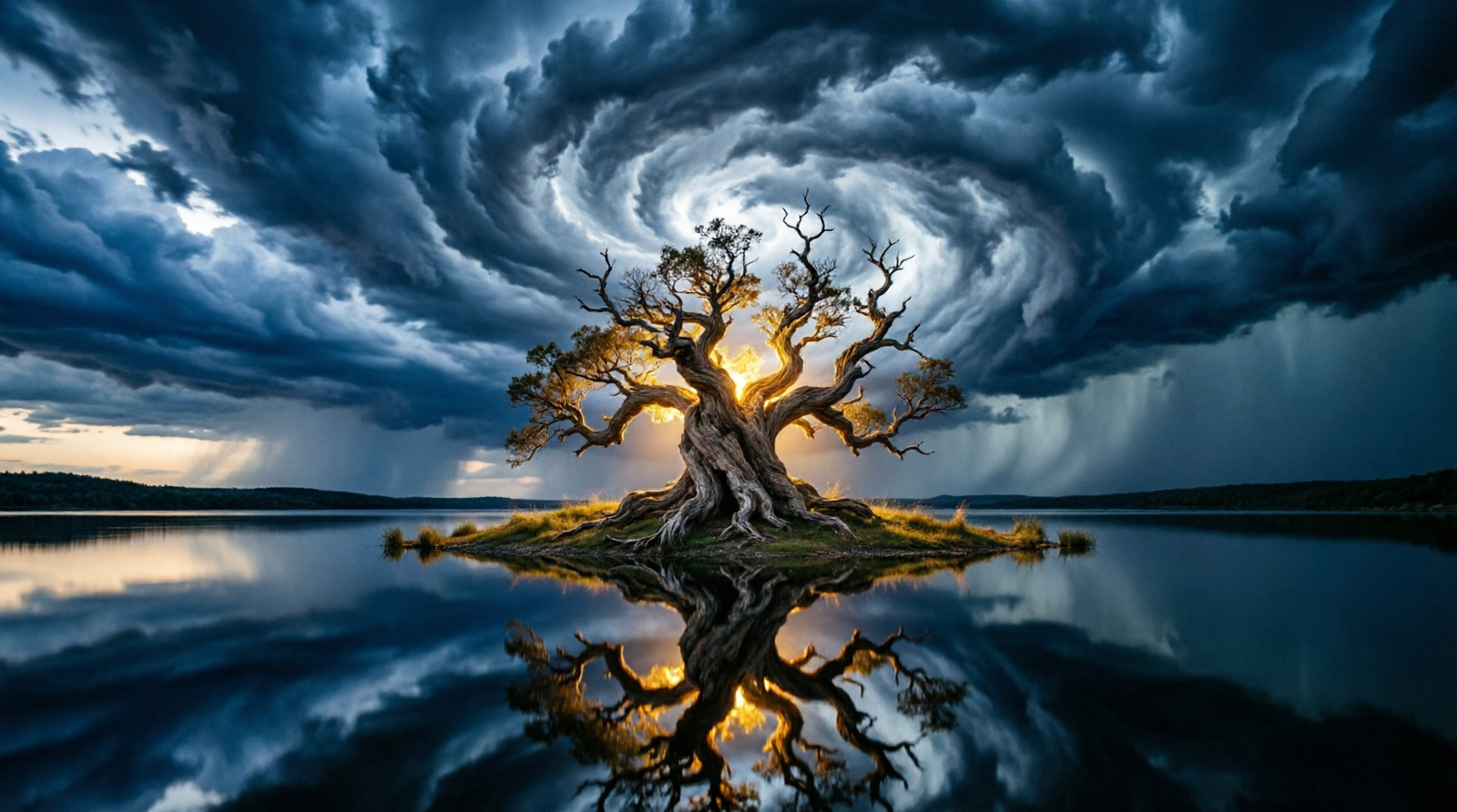
Storm metaphors help readers feel and picture an experience rather than simply receive information about it. They are useful in creative writing, poetry, school assignments, speeches, social media, and everyday conversation because a strong image can communicate fear, power, sadness, conflict, or hope in just a few words.
A plain sentence gives information:
The storm was very strong.
A metaphor gives the reader an image:
The storm was a giant pounding at the door of the town.
The second sentence creates movement and emotion.
In everyday speech
People often use storm-related metaphors without thinking about them:
- “We went through a storm at work.”
- “Her anger was a storm.”
- “The argument became a storm.”
- “He is weathering the storm.”
- “A storm is coming.”
These expressions make difficult situations easier to describe.
In writing
Storm metaphors can help writers show:
- danger
- fear
- confusion
- anger
- sadness
- conflict
- pressure
- uncertainty
- change
- hope after hardship
In school
Students can use storm metaphors in:
- descriptive essays
- narrative writing
- poetry
- personal reflections
- creative writing
- literature analysis
On social media
A short storm metaphor can make a caption more emotional:
“Some storms arrive to clear the sky.”
Or:
“I survived the storm I thought would break me.”
In professional communication
Storm metaphors can work in presentations or speeches when used carefully:
“The company is navigating a financial storm.”
However, very dramatic metaphors may sound unsuitable in formal reports. A simple phrase such as “a period of uncertainty” may be better.
60 Metaphors for Storms
The examples below move from direct descriptions of physical storms to deeper metaphors for emotions, relationships, conflict, and difficult periods in life.
The Storm Was a Raging Beast
Meaning: The storm is compared to a wild animal with enormous strength.
Real explanation: This metaphor makes the storm feel alive, dangerous, and difficult to control. Words such as roared, clawed, and charged work especially well with it.
Sample sentence:
The storm was a raging beast, tearing branches from the old trees.
When to use it: Use it in fiction, poetry, and vivid descriptive writing.
When NOT to use it: Avoid it in technical weather reports.
Alternatives:
- a wild creature
- a furious animal
- a beast of nature
Difficulty: Easy
Tone: Informal to literary
The Storm Was a Battlefield
Meaning: The storm is presented as a place of conflict.
Real explanation: Thunder becomes the sound of battle, lightning becomes flashes of weapons, and the wind becomes an attacking force.
Sample sentence:
By midnight, the village had become a battlefield between the wind and the sea.
When to use it: Strong choice for dramatic fiction.
When NOT to use it: Avoid it when you need calm, scientific description.
Alternatives:
- a war zone
- a field of conflict
- a raging conflict
Difficulty: Easy
Tone: Dramatic
The Storm Was a Dark Cloud
Meaning: The storm represents trouble, worry, or sadness.
Real explanation: A dark cloud can literally appear before rain, but it also suggests something unpleasant hanging over a person or situation.
Sample sentence:
The coming storm was a dark cloud over the town’s summer festival.
When to use it: Useful for both literal and figurative writing.
When NOT to use it: Don’t use it when you need a highly original image.
Alternatives:
- a shadow of trouble
- a sign of danger
- an approaching threat
Difficulty: Very easy
Tone: Neutral
The Storm Was a Wall of Rain
Meaning: The rain is so heavy that it seems like a solid wall.
Real explanation: This metaphor emphasizes how difficult it is to see or move through heavy rain.
Sample sentence:
A wall of rain swallowed the road within minutes.
When to use it: Excellent for descriptive writing.
When NOT to use it: Don’t use it if the rain is light.
Alternatives:
- a curtain of rain
- a sheet of rain
- a flood of rain
Difficulty: Easy
Tone: Neutral
The Storm Was a Roaring Giant
Meaning: The storm is imagined as a huge creature making a powerful noise.
Real explanation: Thunder and strong wind can make a storm feel larger than human life. Calling it a giant gives the weather a physical presence.
Sample sentence:
The roaring giant shook every window in the farmhouse.
When to use it: Stories and children’s creative writing.
When NOT to use it: Avoid it in serious technical writing.
Alternatives:
- a giant force
- a towering monster
- a mighty force
Difficulty: Easy
Tone: Dramatic
The Storm Was a Wild Horse
Meaning: The storm is compared with an animal that cannot be controlled.
Real explanation: A wild horse suggests speed, strength, freedom, and unpredictable movement.
Sample sentence:
The wind raced across the fields like a wild horse, bending every tree in its path.
Strictly speaking, this sentence uses like, so it is a simile. To make it a metaphor:
The wind was a wild horse racing across the fields.
When to use it: Creative writing.
When NOT to use it: Avoid it in formal scientific writing.
Alternatives:
- an untamed force
- a runaway animal
- uncontrolled power
Difficulty: Easy
Tone: Literary
The Storm Was a Hammer from the Sky
Meaning: The storm is portrayed as something striking the earth repeatedly.
Real explanation: Thunder can sound like enormous blows, while heavy rain can feel relentless.
Sample sentence:
Thunder became a hammer from the sky, striking the hills again and again.
When to use it: Dramatic descriptions.
When NOT to use it: Avoid overuse in simple school writing.
Alternatives:
- a blow from the heavens
- a giant hammer
- a pounding force
Difficulty: Medium
Tone: Dramatic
The Storm Was Nature’s Fury
Meaning: The storm represents the powerful and uncontrollable side of nature.
Real explanation: This expression gives nature human emotion. The storm becomes an outward display of anger.
Sample sentence:
The storm revealed nature’s fury as waves crashed against the harbor.
When to use it: Essays, documentaries, stories, and speeches.
When NOT to use it: Don’t present it as a scientific explanation.
Alternatives:
- nature’s anger
- nature unleashed
- the force of nature
Difficulty: Easy
Tone: Formal to literary
The Storm Was a Drumbeat
Meaning: Repeated thunder is compared with rhythmic drumming.
Real explanation: This metaphor focuses on sound rather than danger.
Sample sentence:
Thunder became a deep drumbeat beneath the restless sky.
When to use it: Poetry and descriptive prose.
When NOT to use it: Avoid it if the storm’s main quality is silence or gentle rain.
Alternatives:
- a thunderous rhythm
- a pounding rhythm
- nature’s drum
Difficulty: Medium
Tone: Poetic
The Storm Was a Curtain
Meaning: Rain or darkness hides the world from view.
Real explanation: A curtain covers something, so this metaphor works especially well when heavy rain makes buildings, roads, or mountains disappear.
Sample sentence:
The curtain of rain closed around the house.
When to use it: Visual descriptions.
When NOT to use it: Don’t use it when visibility remains clear.
Alternatives:
- a veil of rain
- a sheet of rain
- a gray curtain
Difficulty: Easy
Tone: Literary
The Storm Was a Sea of Darkness
Meaning: The storm creates a huge feeling of darkness and fear.
Real explanation: A sea suggests something vast and difficult to escape.
Sample sentence:
The village disappeared into a sea of darkness as the clouds rolled in.
When to use it: Poetry and fiction.
When NOT to use it: Avoid if you only need to describe ordinary clouds.
Alternatives:
- a blanket of darkness
- a vast shadow
- an ocean of gloom
Difficulty: Medium
Tone: Poetic
The Storm Was an Angry Giant
Meaning: The storm behaves like a giant with uncontrolled anger.
Real explanation: This gives the weather a personality and makes its power easy for younger readers to understand.
Sample sentence:
The angry giant shook the roof until dawn.
When to use it: Children’s stories and simple creative writing.
When NOT to use it: It may sound too simple for serious literary work.
Alternatives:
- a furious giant
- an enraged force
- a giant in anger
Difficulty: Very easy
Tone: Dramatic
The Storm Was a Wolf at the Door
Meaning: The storm represents danger waiting outside.
Real explanation: A wolf at the door creates a strong sense of threat that cannot be ignored.
Sample sentence:
The winter storm was a wolf at the door, waiting for the lights to go out.
When to use it: Suspense and storytelling.
When NOT to use it: Don’t use it for a mild rainstorm.
Alternatives:
- an approaching threat
- danger outside
- a threat on the doorstep
Difficulty: Medium
Tone: Dramatic
The Storm Was a Monster
Meaning: The storm is presented as a frightening creature.
Real explanation: A monster metaphor makes the weather seem larger, darker, and more dangerous than ordinary conditions.
Sample sentence:
The monster crossed the coast before sunrise.
When to use it: Fiction and dramatic writing.
When NOT to use it: Avoid in factual reports.
Alternatives:
- a terrifying force
- a giant creature
- a destructive beast
Difficulty: Easy
Tone: Dramatic
The Storm Was a Symphony
Meaning: The sounds of the storm become music.
Real explanation: Thunder, rain, and wind can be described as different instruments working together.
Sample sentence:
Rain tapped the roof while thunder played the bass in the storm’s wild symphony.
When to use it: Poetry and artistic descriptions.
When NOT to use it: Avoid if the intended mood is purely frightening.
Alternatives:
- nature’s music
- a wild orchestra
- a thunderous composition
Difficulty: Medium
Tone: Poetic
The Storm Was a Prison
Meaning: The storm traps people indoors.
Real explanation: A prison represents confinement. This metaphor is useful when characters cannot leave because of dangerous weather.
Sample sentence:
The snowstorm turned the farmhouse into a prison.
When to use it: Stories about isolation.
When NOT to use it: Avoid when people can move freely.
Alternatives:
- a cage
- a locked world
- a place of confinement
Difficulty: Easy
Tone: Serious
The Storm Was a Locked Door
Meaning: The storm prevents movement or progress.
Real explanation: A locked door creates a physical barrier. It can also symbolize a blocked opportunity.
Sample sentence:
The storm was a locked door between Maya and the city.
When to use it: Symbolic storytelling.
When NOT to use it: Avoid when the storm does not actually block anything.
Alternatives:
- a barrier
- an obstacle
- a closed gate
Difficulty: Medium
Tone: Literary
The Storm Was a Sea of Noise
Meaning: The storm creates overwhelming sound.
Real explanation: Thunder, wind, rain, and crashing objects can blend into one huge mass of noise.
Sample sentence:
Inside the cabin, the storm was a sea of noise.
When to use it: Descriptive prose.
When NOT to use it: Not suitable for a quiet storm.
Alternatives:
- a wall of sound
- a roar of noise
- a thunderous mass
Difficulty: Easy
Tone: Neutral
The Storm Was a Black Ocean
Meaning: Dark clouds or night make the storm seem endless.
Real explanation: An ocean suggests depth, size, and danger. Blackness adds fear.
Sample sentence:
Above the village stretched a black ocean of clouds.
When to use it: Poetry and fiction.
When NOT to use it: Avoid if the sky is bright.
Alternatives:
- a dark ocean
- a black sea
- a vast shadow
Difficulty: Medium
Tone: Poetic
The Storm Was a Fire
Meaning: The storm spreads quickly and burns with energy, usually figuratively.
Real explanation: A fire can represent speed, danger, destruction, and intensity.
Sample sentence:
The storm raced through the valley like a fire through dry grass.
For a direct metaphor:
The storm was a fire racing through the valley.
When to use it: Dramatic fiction.
When NOT to use it: Don’t imply literal flames unless there are actually fires.
Alternatives:
- a blazing force
- a wave of destruction
- an unstoppable force
Difficulty: Medium
Tone: Dramatic
The Storm Was a Flood of Anger
Meaning: A person’s anger is compared with overwhelming water.
Real explanation: This is a figurative storm metaphor rather than a literal description of weather.
Sample sentence:
His anger was a flood of thunder and rain.
When to use it: Emotional writing.
When NOT to use it: Avoid mixing too many unrelated metaphors in one sentence.
Alternatives:
- a wave of anger
- an eruption of rage
- overwhelming fury
Difficulty: Medium
Tone: Emotional
The Storm Was a Mirror of Her Anger
Meaning: The storm reflects a character’s emotional state.
Real explanation: Writers often use weather to mirror what a character feels inside.
Sample sentence:
Outside, lightning split the sky; inside, the storm was a mirror of her anger.
When to use it: Fiction and literary analysis.
When NOT to use it: Avoid if there is no connection between weather and emotion.
Alternatives:
- a reflection of her rage
- an echo of her feelings
- her emotions made visible
Difficulty: Medium
Tone: Literary
The Storm Was a Wave of Fear
Meaning: Fear arrives with overwhelming force.
Real explanation: Waves rise, move forward, and can overpower people. That makes them useful for describing sudden fear.
Sample sentence:
A wave of fear swept through him when the thunder cracked.
When to use it: Emotional storytelling.
When NOT to use it: Don’t use it for a very small or mild feeling.
Alternatives:
- a rush of fear
- a flood of panic
- a surge of terror
Difficulty: Easy
Tone: Emotional
The Storm Was a Weight on the Town
Meaning: The storm creates pressure and heaviness.
Real explanation: This metaphor focuses on emotional and physical pressure rather than movement.
Sample sentence:
The storm sat like a weight on the town.
Again, this version is a simile. Direct metaphor:
The storm was a weight on the town.
When to use it: Serious descriptions.
When NOT to use it: Avoid if you want a fast, energetic image.
Alternatives:
- a burden
- heavy pressure
- a crushing force
Difficulty: Easy
Tone: Serious
The Storm Was a Shadow
Meaning: The storm represents approaching trouble.
Real explanation: A shadow can suggest something nearby that has not fully arrived yet.
Sample sentence:
The storm was a shadow moving across the horizon.
When to use it: Foreshadowing.
When NOT to use it: Avoid if the storm is already directly overhead and you need a stronger image.
Alternatives:
- an approaching threat
- a dark presence
- a sign of trouble
Difficulty: Very easy
Tone: Neutral
The Storm Was a Warning Bell
Meaning: The storm signals that something dangerous is coming.
Real explanation: A warning bell tells people to prepare. This metaphor works well for storms that change the mood of a story.
Sample sentence:
The first thunder was a warning bell for the sleepy village.
When to use it: Suspense and storytelling.
When NOT to use it: Avoid when there is no sense of warning.
Alternatives:
- an alarm
- a signal of danger
- a call to prepare
Difficulty: Easy
Tone: Dramatic
The Storm Was a Fist
Meaning: The storm seems to strike the earth.
Real explanation: A fist suggests force, impact, anger, and violence.
Sample sentence:
The storm was a fist pounding against the windows.
When to use it: Strong weather descriptions.
When NOT to use it: Too aggressive for peaceful scenes.
Alternatives:
- a powerful blow
- a striking force
- a punch from nature
Difficulty: Easy
Tone: Dramatic
The Storm Was a Giant Drum
Meaning: Thunder produces repeated booming sounds.
Real explanation: This metaphor focuses on the sound of thunder rather than rain or wind.
Sample sentence:
The sky became a giant drum, booming over the rooftops.
When to use it: Children’s writing and poetry.
When NOT to use it: Don’t use it if the storm has no thunder.
Alternatives:
- a thunder drum
- a booming instrument
- nature’s drum
Difficulty: Easy
Tone: Playful
The Storm Was a Black Blanket
Meaning: Dark clouds cover the sky.
Real explanation: A blanket covers a bed, while thick clouds can seem to cover the earth.
Sample sentence:
A black blanket spread across the afternoon sky.
When to use it: Simple descriptive writing.
When NOT to use it: Avoid when the clouds are thin.
Alternatives:
- a dark cover
- a blanket of clouds
- a heavy veil
Difficulty: Very easy
Tone: Neutral
The Storm Was an Ocean in the Sky
Meaning: Clouds and rain are compared with a huge ocean.
Real explanation: The metaphor emphasizes scale and movement.
Sample sentence:
An ocean in the sky rolled toward the mountains.
When to use it: Poetry and landscape writing.
When NOT to use it: Avoid if you need a realistic scientific description.
Alternatives:
- a sea of clouds
- a sky full of waves
- a rolling cloud ocean
Difficulty: Easy
Tone: Poetic
The Storm Was a Broken Orchestra
Meaning: The storm’s sounds are loud, chaotic, and disordered.
Real explanation: An orchestra normally produces organized music. A broken orchestra suggests instruments playing without harmony.
Sample sentence:
Thunder and wind formed a broken orchestra above the city.
When to use it: Artistic writing.
When NOT to use it: Avoid if you want to emphasize beauty rather than chaos.
Alternatives:
- chaotic music
- wild noise
- a shattered symphony
Difficulty: Medium
Tone: Literary
The Storm Was a Restless Child
Meaning: The storm moves unpredictably and refuses to settle.
Real explanation: This gives the weather human behavior.
Sample sentence:
The storm was a restless child, kicking at the windows all night.
When to use it: Personification and creative writing.
When NOT to use it: Avoid if you need a frightening mood.
Alternatives:
- an unsettled force
- a restless creature
- wild energy
Difficulty: Easy
Tone: Playful
The Storm Was a Thief
Meaning: The storm takes something away.
Real explanation: A storm can figuratively steal peace, sleep, sunlight, safety, or time.
Sample sentence:
The storm was a thief that stole the town’s peaceful night.
When to use it: Personification and narrative writing.
When NOT to use it: Avoid if nothing is actually lost.
Alternatives:
- a robber of peace
- a taker of calm
- a destroyer of quiet
Difficulty: Easy
Tone: Literary
The Storm Was a Prisoner Breaking Free
Meaning: The storm appears to have been held back and then suddenly becomes powerful.
Real explanation: This metaphor gives the weather a sense of pent-up energy.
Sample sentence:
The storm was a prisoner breaking free across the coast.
When to use it: Action scenes.
When NOT to use it: Avoid if the storm develops slowly and gently.
Alternatives:
- released power
- unleashed energy
- freedom turned violent
Difficulty: Medium
Tone: Dramatic
The Storm Was a River of Wind
Meaning: The wind moves continuously in a strong current.
Real explanation: A river has direction and movement, which makes this useful for describing strong winds.
Sample sentence:
A river of wind rushed through the narrow streets.
When to use it: Descriptive writing.
When NOT to use it: Avoid when the wind is weak or still.
Alternatives:
- a current of wind
- a stream of air
- rushing wind
Difficulty: Easy
Tone: Neutral
The Storm Was a Dancer
Meaning: The storm moves in changing, unpredictable patterns.
Real explanation: This metaphor can make a storm seem graceful instead of purely dangerous.
Sample sentence:
Lightning was a silver dancer across the dark sky.
When to use it: Poetry and beautiful descriptions.
When NOT to use it: Avoid if the scene requires a harsh, terrifying tone.
Alternatives:
- a sky dancer
- a performer
- a moving shadow
Difficulty: Easy
Tone: Poetic
The Storm Was a Dragon
Meaning: The storm is powerful, frightening, and legendary.
Real explanation: A dragon gives the storm a mythical personality. Thunder can become its roar, while lightning can become its fire.
Sample sentence:
The storm was a dragon breathing thunder over the mountains.
When to use it: Fantasy and imaginative writing.
When NOT to use it: Avoid in realistic professional writing.
Alternatives:
- a mythical beast
- a sky dragon
- a fire-breathing giant
Difficulty: Easy
Tone: Fantasy
The Storm Was a Dragon’s Roar
Meaning: Thunder is compared with the sound of a dragon.
Real explanation: This creates a vivid image without making the entire storm a creature.
Sample sentence:
Thunder rolled across the valley like a dragon’s roar.
For a direct metaphor:
Thunder was a dragon’s roar across the valley.
When to use it: Fantasy and dramatic fiction.
When NOT to use it: Avoid in technical writing.
Alternatives:
- a giant roar
- a beastly growl
- a monstrous sound
Difficulty: Easy
Tone: Dramatic
The Storm Was a Broken Clock
Meaning: The storm makes time feel strange or endless.
Real explanation: During a long storm, people may lose track of day and night. The metaphor emphasizes uncertainty.
Sample sentence:
The storm was a broken clock; every hour felt exactly the same.
When to use it: Stories about isolation.
When NOT to use it: Avoid if time is not part of the scene.
Alternatives:
- endless waiting
- frozen time
- a pause in life
Difficulty: Medium
Tone: Literary
The Storm Was a Test
Meaning: The storm represents a challenge people must overcome.
Real explanation: This is especially useful when weather symbolizes hardship.
Sample sentence:
The storm was a test of their courage.
When to use it: Inspirational writing.
When NOT to use it: Avoid if you don’t want to give the storm a symbolic meaning.
Alternatives:
- a challenge
- a trial
- a difficult lesson
Difficulty: Very easy
Tone: Neutral
The Storm Was a Mountain to Climb
Meaning: The storm represents a difficult problem.
Real explanation: A mountain takes effort to climb. This metaphor turns hardship into a physical challenge.
Sample sentence:
This financial crisis was a mountain to climb, but the team kept moving.
When to use it: Motivational writing.
When NOT to use it: Avoid mixing it with several other unrelated metaphors.
Alternatives:
- a major challenge
- a difficult road
- a steep obstacle
Difficulty: Very easy
Tone: Inspirational
The Storm Was a Rough Sea
Meaning: A difficult period is compared with dangerous water.
Real explanation: Rough seas require skill and patience to navigate. This makes the metaphor useful for describing uncertain times.
Sample sentence:
The company was sailing through a rough sea of uncertainty.
When to use it: Business writing and speeches.
When NOT to use it: Avoid excessive nautical imagery if the topic is unrelated.
Alternatives:
- troubled waters
- uncertain conditions
- difficult times
Difficulty: Easy
Tone: Neutral
The Storm Was a Maze
Meaning: The situation is confusing and difficult to escape.
Real explanation: A maze represents uncertainty, wrong turns, and the need to find a path.
Sample sentence:
The storm of conflicting emotions became a maze in her mind.
When to use it: Emotional writing.
When NOT to use it: Avoid if the main idea is physical danger.
Alternatives:
- confusion
- a tangled problem
- a difficult path
Difficulty: Medium
Tone: Literary
The Storm Was a Knot
Meaning: Problems become tangled together.
Real explanation: A knot is hard to untangle. It works well when several problems create one difficult situation.
Sample sentence:
Their argument became a knot of anger, fear, and regret.
When to use it: Emotional and relationship writing.
When NOT to use it: Don’t use it for simple problems.
Alternatives:
- a tangled mess
- a complicated problem
- emotional confusion
Difficulty: Easy
Tone: Neutral
The Storm Was a Door to Change
Meaning: A difficult event creates an opportunity for something new.
Real explanation: Storms often mark transitions. This metaphor shifts attention from destruction to what comes next.
Sample sentence:
The crisis became a door to change.
When to use it: Inspirational essays.
When NOT to use it: Avoid forcing a positive message onto a tragic situation.
Alternatives:
- a turning point
- a new beginning
- an opening for change
Difficulty: Easy
Tone: Inspirational
The Storm Was a Teacher
Meaning: Hard times teach valuable lessons.
Real explanation: This metaphor focuses on growth rather than suffering.
Sample sentence:
The storm was a harsh teacher, but it taught us how to stand together.
When to use it: Personal essays and reflective writing.
When NOT to use it: Be careful when discussing real trauma or serious loss.
Alternatives:
- a difficult lesson
- a teacher of resilience
- a test of character
Difficulty: Easy
Tone: Reflective
The Storm Was a Fire Alarm
Meaning: A crisis signals that something needs attention.
Real explanation: A fire alarm does not necessarily mean everything is lost; it tells people to act.
Sample sentence:
The sudden drop in sales was a fire alarm for the company.
When to use it: Business and professional writing.
When NOT to use it: Don’t use it when there is no warning function.
Alternatives:
- a warning sign
- an alarm
- a wake-up call
Difficulty: Easy
Tone: Professional
The Storm Was a Wake-Up Call
Meaning: A difficult event forces people to notice a problem.
Real explanation: This is a common figurative expression that can connect a storm with sudden awareness.
Sample sentence:
The destructive storm was a wake-up call about the town’s weak emergency plans.
When to use it: Essays, speeches, and discussions.
When NOT to use it: Avoid making every disaster sound like a lesson.
Alternatives:
- a warning
- a reality check
- a call to action
Difficulty: Very easy
Tone: Neutral
The Storm Was a Battle Inside
Meaning: The storm represents inner conflict.
Real explanation: A person may feel torn between fear and courage, anger and forgiveness, or hope and sadness.
Sample sentence:
Behind her calm face, a storm was a battle inside.
When to use it: Character development.
When NOT to use it: Avoid if the character has no internal conflict.
Alternatives:
- an inner struggle
- an emotional battle
- a conflict within
Difficulty: Easy
Tone: Emotional
The Storm Was a Cage of Fear
Meaning: Fear traps someone.
Real explanation: The cage metaphor focuses on the feeling of being unable to escape.
Sample sentence:
His fear became a cage, and the storm only tightened its bars.
When to use it: Psychological fiction.
When NOT to use it: Avoid if the character is not actually frightened.
Alternatives:
- a prison of fear
- trapped anxiety
- emotional confinement
Difficulty: Medium
Tone: Serious
The Storm Was a River of Tears
Meaning: The storm represents intense sadness.
Real explanation: Rain becomes a symbolic expression of crying.
Sample sentence:
Outside, rain filled the streets; inside, grief became a river of tears.
When to use it: Poetry and emotional fiction.
When NOT to use it: Avoid if you want a light or humorous tone.
Alternatives:
- a flood of sadness
- endless tears
- overwhelming grief
Difficulty: Easy
Tone: Poetic
The Storm Was a Broken Heart
Meaning: The storm represents emotional pain.
Real explanation: A broken heart is already a metaphor for grief or romantic pain. Combining it with storm imagery makes the feeling more intense.
Sample sentence:
Her broken heart was a storm with no quiet morning.
When to use it: Poetry and relationship writing.
When NOT to use it: Avoid in formal business communication.
Alternatives:
- deep heartbreak
- emotional pain
- a wounded heart
Difficulty: Easy
Tone: Emotional
The Storm Was Grief
Meaning: The storm directly represents overwhelming sorrow.
Real explanation: Grief can arrive in waves, become intense, and make ordinary life feel dark.
Sample sentence:
Grief was a storm that moved through the house without asking permission.
When to use it: Personal and literary writing.
When NOT to use it: Avoid treating grief as something people simply “finish” after a storm passes.
Alternatives:
- overwhelming sorrow
- a season of grief
- deep mourning
Difficulty: Easy
Tone: Serious
The Storm Was Anger
Meaning: Strong anger is compared directly with a violent storm.
Real explanation: Both anger and storms can build, intensify, and eventually explode.
Sample sentence:
His anger was a storm behind his quiet eyes.
When to use it: Character descriptions.
When NOT to use it: Avoid if the character is genuinely calm.
Alternatives:
- a storm of rage
- bottled fury
- rising anger
Difficulty: Very easy
Tone: Emotional
The Storm Was Anxiety
Meaning: Anxiety feels overwhelming and difficult to control.
Real explanation: The metaphor helps turn an invisible feeling into something physical and powerful.
Sample sentence:
Anxiety was a storm moving through her thoughts.
When to use it: Personal essays and creative writing.
When NOT to use it: Avoid using metaphor as a substitute for precise medical or clinical language.
Alternatives:
- a rush of worry
- overwhelming fear
- mental turbulence
Difficulty: Easy
Tone: Reflective
The Storm Was Conflict
Meaning: A disagreement is compared with a storm.
Real explanation: Conflict can begin quietly, become louder, and eventually cause damage.
Sample sentence:
The meeting became a storm of competing opinions.
When to use it: Workplace and social situations.
When NOT to use it: Don’t use it for a friendly discussion.
Alternatives:
- heated disagreement
- clash of opinions
- intense dispute
Difficulty: Easy
Tone: Neutral
The Storm Was a Storm of Words
Meaning: Many words or arguments arrive quickly and forcefully.
Real explanation: This metaphor works well for heated conversations.
Sample sentence:
A storm of words filled the room after the decision was announced.
When to use it: Essays and dialogue.
When NOT to use it: Avoid when only one person speaks calmly.
Alternatives:
- flood of words
- barrage of comments
- rush of arguments
Difficulty: Easy
Tone: Neutral
The Storm Was a Crowd of Questions
Meaning: Many questions arrive at once.
Real explanation: A crowd suggests many things arriving together and becoming difficult to manage.
Sample sentence:
After the announcement, a storm of questions hit the manager.
When to use it: Professional or school writing.
When NOT to use it: Avoid when there are only one or two questions.
Alternatives:
- a flood of questions
- a wave of questions
- many questions at once
Difficulty: Very easy
Tone: Neutral
The Storm Was a Flood of Problems
Meaning: Problems arrive quickly and overwhelm someone.
Real explanation: The water metaphor emphasizes quantity and lack of control.
Sample sentence:
One missed deadline became a flood of problems for the team.
When to use it: Workplace and everyday English.
When NOT to use it: Avoid if the problem is small.
Alternatives:
- a wave of problems
- a pile of trouble
- mounting difficulties
Difficulty: Very easy
Tone: Neutral
The Storm Was a Test of Courage
Meaning: The storm creates a situation in which courage is needed.
Real explanation: This metaphor focuses on the human response rather than the weather itself.
Sample sentence:
For the rescue crew, the storm was a test of courage.
When to use it: Inspirational writing and stories.
When NOT to use it: Avoid romanticizing genuine danger.
Alternatives:
- a test of bravery
- a challenge to face
- a trial of courage
Difficulty: Easy
Tone: Inspirational
The Storm Was a Turning Point
Meaning: The storm changes what happens next.
Real explanation: A literal storm can change a story, while a figurative storm can mark a major life event.
Sample sentence:
That difficult year became a turning point in her life.
When to use it: Essays and personal stories.
When NOT to use it: Avoid if nothing changes afterward.
Alternatives:
- a major change
- a crossroads
- a defining moment
Difficulty: Very easy
Tone: Neutral
The Storm Was a Chapter
Meaning: A difficult period is only one part of a larger story.
Real explanation: This metaphor can give readers perspective and hope.
Sample sentence:
The storm was only a chapter, not the whole story.
When to use it: Inspirational writing.
When NOT to use it: Avoid minimizing serious suffering.
Alternatives:
- one part of the journey
- a temporary season
- one stage of life
Difficulty: Very easy
Tone: Inspirational
The Storm Was a Season
Meaning: A difficult period will eventually change.
Real explanation: Seasons naturally change, so the metaphor suggests that hardship is not necessarily permanent.
Sample sentence:
This storm is a season, not a lifetime.
When to use it: Encouragement and reflective writing.
When NOT to use it: Avoid promising a quick end to someone’s pain.
Alternatives:
- a difficult period
- a temporary phase
- a hard season
Difficulty: Very easy
Tone: Encouraging
The Storm Was a Doorway to Strength
Meaning: Hardship can reveal or develop strength.
Real explanation: The storm becomes a passage rather than simply an obstacle.
Sample sentence:
The crisis became a doorway to strength she never knew she had.
When to use it: Motivational writing.
When NOT to use it: Don’t imply that suffering is always beneficial.
Alternatives:
- a path to resilience
- a chance to grow
- a test that builds strength
Difficulty: Medium
Tone: Inspirational
The Storm Was a Test of Friendship
Meaning: A difficult situation reveals the strength of relationships.
Real explanation: Storms can be used symbolically to test whether people stay together during hard times.
Sample sentence:
The crisis was a test of friendship, and they refused to leave each other behind.
When to use it: Stories and personal essays.
When NOT to use it: Avoid judging relationships too simply.
Alternatives:
- a test of loyalty
- a challenge to friendship
- a measure of trust
Difficulty: Easy
Tone: Emotional
The Storm Was a Bridge
Meaning: A difficult experience connects two stages of life.
Real explanation: A bridge carries someone from one side to another. Here, the storm becomes the difficult path between an old life and a new one.
Sample sentence:
The storm became a bridge between who she was and who she would become.
When to use it: Reflective and literary writing.
When NOT to use it: Avoid if there is no meaningful change.
Alternatives:
- a path forward
- a passage
- a transition
Difficulty: Medium
Tone: Literary
The Storm Was a Furnace
Meaning: Hardship tests and changes a person.
Real explanation: A furnace uses intense heat to transform materials. This metaphor focuses on pressure and transformation.
Sample sentence:
The difficult years were a furnace that tested his patience.
When to use it: Literary and motivational writing.
When NOT to use it: Avoid if you want a gentle metaphor.
Alternatives:
- a trial by fire
- intense pressure
- a period of testing
Difficulty: Medium
Tone: Serious
The Storm Was a Hammer Shaping Steel
Meaning: Difficult experiences build strength.
Real explanation: A blacksmith uses repeated hammer blows to shape metal. The metaphor suggests that pressure can change a person.
Sample sentence:
The years of struggle were a hammer shaping steel.
When to use it: Motivational essays.
When NOT to use it: Avoid suggesting every hardship automatically makes people stronger.
Alternatives:
- pressure that builds character
- a shaping force
- a test of resilience
Difficulty: Medium
Tone: Inspirational
The Storm Was a Wild River
Meaning: The storm represents something powerful that cannot easily be controlled.
Real explanation: Rivers can move quickly and carry everything in their path. This metaphor highlights momentum.
Sample sentence:
The crisis became a wild river, carrying every old problem downstream.
When to use it: Creative and reflective writing.
When NOT to use it: Avoid if the situation is calm and predictable.
Alternatives:
- an unstoppable current
- a rushing force
- a powerful flow
Difficulty: Easy
Tone: Literary
The Storm Was a Tidal Wave
Meaning: A problem arrives with overwhelming force.
Real explanation: A tidal wave suggests sudden scale and little time to react.
Sample sentence:
The news arrived as a tidal wave of fear.
When to use it: Strong emotional or social situations.
When NOT to use it: Don’t use it for minor problems.
Alternatives:
- an overwhelming wave
- a massive surge
- a crushing force
Difficulty: Easy
Tone: Dramatic
The Storm Was a Shadow Over Tomorrow
Meaning: A storm creates uncertainty about the future.
Real explanation: The metaphor focuses on worry rather than physical destruction.
Sample sentence:
The coming crisis was a shadow over tomorrow.
When to use it: Essays, speeches, and reflective writing.
When NOT to use it: Avoid if the future is actually hopeful and clear.
Alternatives:
- uncertainty ahead
- a cloud over the future
- future trouble
Difficulty: Easy
Tone: Reflective
The Storm Was a Fog in the Mind
Meaning: Emotional pressure makes thinking difficult.
Real explanation: Fog reduces visibility. In the same way, stress or fear can make decisions harder.
Sample sentence:
Her worry was a fog in the mind, hiding every clear answer.
When to use it: Personal writing.
When NOT to use it: Avoid using it as a medical claim.
Alternatives:
- mental confusion
- unclear thinking
- a clouded mind
Difficulty: Easy
Tone: Reflective
The Storm Was a Fire in the Heart
Meaning: Strong emotion burns intensely inside a person.
Real explanation: Fire often represents passion, anger, desire, or emotional intensity.
Sample sentence:
His jealousy was a fire in the heart.
When to use it: Poetry and emotional fiction.
When NOT to use it: Avoid in formal communication.
Alternatives:
- burning emotion
- intense passion
- inner fire
Difficulty: Easy
Tone: Poetic
The Storm Was a Chain Reaction
Meaning: One problem causes another, creating a larger crisis.
Real explanation: This metaphor is useful when a storm-like situation grows because events affect one another.
Sample sentence:
The first mistake triggered a chain reaction of problems.
When to use it: Business, school, and analytical writing.
When NOT to use it: Avoid if events are unrelated.
Alternatives:
- domino effect
- series of problems
- cascading trouble
Difficulty: Easy
Tone: Professional
The Storm Was a Domino Effect
Meaning: One event causes several others to fall into place.
Real explanation: Like falling dominoes, one event leads directly to another.
Sample sentence:
The missed shipment became the first domino in a storm of business problems.
When to use it: Professional and academic writing.
When NOT to use it: Avoid if there is no cause-and-effect chain.
Alternatives:
- chain reaction
- cascading problems
- one problem after another
Difficulty: Easy
Tone: Professional
The Storm Was an Unfinished Sentence
Meaning: A difficult situation leaves uncertainty about what happens next.
Real explanation: An unfinished sentence creates suspense. The reader waits for the ending.
Sample sentence:
The storm was an unfinished sentence hanging over the town.
When to use it: Literary fiction and poetry.
When NOT to use it: Avoid in practical writing.
Alternatives:
- unanswered question
- uncertain future
- incomplete story
Difficulty: Hard
Tone: Literary
The Storm Was a Question Without an Answer
Meaning: The storm represents uncertainty.
Real explanation: This metaphor focuses on not knowing what will happen.
Sample sentence:
The approaching storm was a question without an answer.
When to use it: Reflective writing.
When NOT to use it: Avoid if the outcome is already known.
Alternatives:
- an unknown future
- unanswered uncertainty
- a mystery ahead
Difficulty: Easy
Tone: Reflective
The Storm Was a Clock Running Out
Meaning: The storm creates urgency.
Real explanation: A clock running out suggests limited time and growing pressure.
Sample sentence:
The storm was a clock running out, forcing everyone to make a choice.
When to use it: Suspense and action writing.
When NOT to use it: Avoid if there is no deadline.
Alternatives:
- a countdown
- time running short
- growing urgency
Difficulty: Medium
Tone: Dramatic
The Storm Was a Gatekeeper
Meaning: The storm controls who can move forward.
Real explanation: A gatekeeper decides who can enter or pass. This metaphor turns the storm into an obstacle that demands patience.
Sample sentence:
The mountain storm became a gatekeeper between the hikers and home.
When to use it: Fiction and symbolic writing.
When NOT to use it: Avoid if the storm does not actually block progress.
Alternatives:
- a barrier
- a guardian of the road
- an obstacle
Difficulty: Medium
Tone: Literary
The Storm Was a Reset Button
Meaning: A storm forces people or situations to begin again.
Real explanation: This modern metaphor works especially well when an event wipes away old plans and creates a new starting point.
Sample sentence:
The crisis became a reset button for the struggling company.
When to use it: Modern essays, business writing, and social media.
When NOT to use it: Avoid when discussing serious loss in a casual way.
Alternatives:
- a fresh start
- a new beginning
- a chance to rebuild
Difficulty: Very easy
Tone: Modern
Quick Reference Table
| # | Storm metaphor | Main idea | Best setting | Tone |
|---|---|---|---|---|
| 1 | Raging beast | Wild power | Fiction | Dramatic |
| 2 | Battlefield | Conflict | Stories | Dramatic |
| 3 | Dark cloud | Trouble | Everyday English | Neutral |
| 4 | Wall of rain | Heavy rain | Description | Neutral |
| 5 | Roaring giant | Great power | Fiction | Dramatic |
| 6 | Wild horse | Uncontrolled movement | Fiction | Literary |
| 7 | Hammer from the sky | Violent force | Creative writing | Dramatic |
| 8 | Nature’s fury | Natural power | Essays | Formal |
| 9 | Drumbeat | Repeated thunder | Poetry | Poetic |
| 10 | Curtain | Hidden view | Description | Literary |
| 11 | Sea of darkness | Fear/gloom | Poetry | Poetic |
| 12 | Angry giant | Powerful weather | Children’s writing | Dramatic |
| 13 | Wolf at the door | Threat | Suspense | Dramatic |
| 14 | Monster | Danger | Fiction | Dramatic |
| 15 | Symphony | Storm sounds | Poetry | Artistic |
| 16 | Prison | Confinement | Fiction | Serious |
| 17 | Locked door | Barrier | Symbolic writing | Literary |
| 18 | Sea of noise | Loudness | Description | Neutral |
| 19 | Black ocean | Vast darkness | Poetry | Poetic |
| 20 | Fire | Intensity | Fiction | Dramatic |
| 21 | Flood of anger | Rage | Emotional writing | Emotional |
| 22 | Mirror of anger | Reflection | Fiction | Literary |
| 23 | Wave of fear | Fear | Emotional writing | Emotional |
| 24 | Weight | Pressure | Serious writing | Serious |
| 25 | Shadow | Approaching trouble | Fiction | Neutral |
| 26 | Warning bell | Danger signal | Suspense | Dramatic |
| 27 | Fist | Impact | Fiction | Dramatic |
| 28 | Giant drum | Thunder | Poetry | Playful |
| 29 | Black blanket | Dark clouds | Description | Neutral |
| 30 | Ocean in the sky | Huge clouds | Poetry | Poetic |
| 31 | Broken orchestra | Chaos | Literary writing | Literary |
| 32 | Restless child | Unpredictability | Fiction | Playful |
| 33 | Thief | Lost peace | Fiction | Literary |
| 34 | Prisoner breaking free | Unleashed energy | Action writing | Dramatic |
| 35 | River of wind | Movement | Description | Neutral |
| 36 | Dancer | Movement | Poetry | Poetic |
| 37 | Dragon | Mythic power | Fantasy | Dramatic |
| 38 | Dragon’s roar | Thunder | Fantasy | Dramatic |
| 39 | Broken clock | Endless time | Fiction | Literary |
| 40 | Test | Challenge | Essays | Neutral |
| 41 | Mountain to climb | Difficulty | Motivation | Inspirational |
| 42 | Rough sea | Uncertainty | Business | Neutral |
| 43 | Maze | Confusion | Emotional writing | Literary |
| 44 | Knot | Tangled problems | Relationships | Neutral |
| 45 | Door to change | Transformation | Essays | Inspirational |
| 46 | Teacher | Life lesson | Reflection | Reflective |
| 47 | Fire alarm | Warning | Business | Professional |
| 48 | Wake-up call | Awareness | Essays | Neutral |
| 49 | Battle inside | Inner conflict | Fiction | Emotional |
| 50 | Cage of fear | Emotional trap | Fiction | Serious |
| 51 | River of tears | Grief | Poetry | Poetic |
| 52 | Broken heart | Heartbreak | Poetry | Emotional |
| 53 | Grief | Deep sadness | Reflection | Serious |
| 54 | Anger | Rage | Fiction | Emotional |
| 55 | Anxiety | Worry | Personal writing | Reflective |
| 56 | Conflict | Disagreement | Workplace | Neutral |
| 57 | Storm of words | Arguments | Dialogue | Neutral |
| 58 | Crowd of questions | Many questions | School/work | Neutral |
| 59 | Flood of problems | Many problems | Work/life | Neutral |
| 60 | Reset button | Fresh start | Modern writing | Modern |
Real-Life Conversations
Storm metaphors sound most natural when they fit the situation. People do not normally stop during a conversation and announce that they are “using a metaphor.” The image should simply support the idea.
Conversation 1: Friends Talking About a Difficult Week
Sam: You look exhausted.
Jordan: I am. Work has been crazy all week.
Sam: What happened?
Jordan: Two people quit, the deadline moved up, and the client changed the whole project.
Sam: That’s a lot.
Jordan: Honestly, it feels like a storm of problems.
Sam: Then maybe tonight you should do absolutely nothing.
Jordan: That’s the best advice I’ve heard all week.
Here, “storm of problems” works because several difficulties arrived close together.
Conversation 2: Family During a Real Storm
Mom: Did you bring the flashlights?
Alex: Yep. They’re on the kitchen table.
Mom: Good. The wind is getting stronger.
Alex: It sounds like a giant outside.
Mom: That’s one way to describe it.
Alex: Seriously, the storm is shaking the windows.
Mom: Stay away from them until it passes.
The phrase “the storm is a giant” gives a child-friendly image without needing complicated vocabulary.
Conversation 3: Student and Teacher
Student: I don’t know how to start my essay.
Teacher: What’s your main idea?
Student: I want to explain how the storm represents the character’s anger.
Teacher: Good. What happens to the weather when the character becomes angry?
Student: The clouds get darker, and the thunder gets louder.
Teacher: Then you can explain that the storm acts as a mirror of his emotions.
Student: So the outside storm shows what’s happening inside him?
Teacher: Exactly.
This is a common literary technique called pathetic fallacy or, more broadly, using nature to reflect a character’s emotional state.
Conversation 4: Office Discussion
Manager: We need to talk about last quarter.
Dana: The numbers weren’t great.
Manager: No, but they can be fixed.
Dana: It feels like we’re in a storm.
Manager: I agree. But let’s focus on the next step instead of the noise around us.
Dana: So we need a plan, not panic.
Manager: Exactly.
Here, storm represents business pressure and uncertainty.
Conversation 5: Social Media
Mia: You posted, “The storm wasn’t the end.”
Chris: Yeah.
Mia: What does it mean?
Chris: I had a rough year. I wanted to remind myself that a hard season doesn’t define my whole life.
Mia: That’s actually a good caption.
Chris: Thanks. I almost wrote, “I survived the apocalypse,” but that felt dramatic.
Mia: Much better choice.
The phrase “the storm wasn’t the end” works because it gives hardship a temporary place in a larger story.
Everyday Usage
Storm metaphors appear in many forms of English. The key is to match the image with the setting.
Conversation
In everyday speech, simple metaphors work best:
- “We’re going through a storm right now.”
- “That meeting was a storm of questions.”
- “His anger was a storm.”
- “The news created a storm of criticism.”
Keep the language natural. You do not need a complicated metaphor every time.
Books
Fiction writers use storms to create:
- atmosphere
- suspense
- conflict
- symbolism
- foreshadowing
- emotional contrast
A storm can arrive just before a major decision or during an argument.
Movies
Visual storytelling makes storm metaphors especially powerful. A dark sky may signal danger before the audience understands what is about to happen.
A character standing alone in heavy rain can also symbolize:
- loneliness
- grief
- regret
- change
- emotional release
Poetry
Poetry gives storm metaphors more freedom.
For example:
Thunder is the heart of the sky.
The point is not scientific accuracy. The point is emotional imagery.
Emails
Use storm metaphors carefully in professional email.
Instead of:
“Our project is trapped in a hurricane of disasters.”
A better professional version is:
“We are facing several challenges, but we have a clear plan for addressing them.”
A mild metaphor such as “weathering a difficult period” can work, but clarity should come first.
Text messages
Texting allows more casual expressions:
- “This week has been a storm.”
- “My inbox is a disaster.”
- “We’re in the middle of a storm right now.”
- “Hopefully the storm passes soon.”
Short, emotional metaphors work well:
“Every storm has a sky beyond it.”
“Still standing after the storm.”
“Some storms change the landscape.”
Longer reflective language can work:
“The hardest storms often reveal who is willing to stand beside you.”
X
Short metaphors are usually stronger:
“A storm can change the road without changing the destination.”
Professional storm metaphors should focus on leadership, resilience, or uncertainty:
“Good leadership matters most when the business enters a storm.”
Avoid dramatic language that makes a small business problem sound like a disaster.
School assignments
For an essay, explain the metaphor after using it.
Weak:
The storm was a monster.
Stronger:
The storm was a monster, showing how powerless the villagers felt against forces they could not control.
The second version explains why the metaphor matters.
Writing Tips
The best storm metaphor is not always the most dramatic one. It is the one that matches your meaning.
Choose the image based on the emotion
Use:
- beast for danger
- battlefield for conflict
- shadow for fear of what is coming
- cage for feeling trapped
- wave for overwhelming emotion
- fire for passion or anger
- teacher for lessons
- bridge for transition
- door for opportunity
- season for temporary hardship
Formal vs. informal
Formal:
“The organization is navigating a period of uncertainty.”
Informal:
“We’re stuck in a storm right now.”
Both communicate a similar idea, but the second sounds more conversational.
Speaking vs. writing
When speaking, use familiar metaphors:
“It’s been a rough storm.”
In creative writing, you can take more risks:
“The storm dragged its black fingers across the valley.”
American vs. British English
Storm metaphors are generally understood in both American and British English. There is no major difference that prevents ordinary readers from understanding expressions such as:
- storm of anger
- dark cloud
- weather the storm
- storm of criticism
- eye of the storm
Vocabulary around particular weather events can differ by region, but the figurative language remains broadly understandable.
Children vs. adults
For children, choose clear images:
- angry giant
- giant drum
- wild horse
- monster
- dark blanket
For adults, you can use more abstract images:
- unfinished sentence
- bridge to change
- emotional battlefield
- shadow over tomorrow
- storm of uncertainty
Professional communication
Use metaphors only when they improve understanding.
Good:
“The team is weathering a period of uncertainty.”
Less useful:
“Our department is trapped beneath a monstrous ocean of corporate thunder.”
The second sentence sounds creative but does not communicate efficiently.
Creative writing
A strong storm metaphor should connect to the story.
Quick Tip: Do not choose a metaphor simply because it sounds impressive. Choose one because it reveals something.
Common Mistakes
| Mistake | Reason | Correct version | Practical explanation |
|---|---|---|---|
| Using “like” and calling it a metaphor | “Like” usually signals a simile | “The storm was a beast.” | A simile says one thing is like another. |
| Using too many metaphors | The image becomes confusing | Keep one main image | Let the reader follow one idea. |
| Using a violent metaphor for a gentle storm | The image does not match reality | Use “dancer” or “symphony” | Match tone with weather. |
| Calling every problem a storm | The metaphor becomes repetitive | Vary your imagery | Not every difficulty needs storm language. |
| Mixing unrelated images | The reader loses the picture | Choose one image | Avoid “the storm was a dragon swimming through a prison of fire.” |
| Using dramatic language in a formal report | It may sound unprofessional | Use clear language | Business writing values precision. |
| Explaining the metaphor too much | It can weaken the image | Let context help | Trust the reader when possible. |
| Using clichés repeatedly | The writing feels predictable | Create fresh variations | Original details make metaphors stronger. |
| Ignoring context | The metaphor may feel forced | Match image to scene | Context determines meaning. |
| Treating metaphor as literal fact | Figurative language gets misunderstood | Signal symbolism through context | Readers should understand the intended meaning. |
Multiple Choice Questions
1. What is a metaphor for a storm?
A. A weather forecast
B. A direct comparison between a storm and another thing
C. A scientific measurement
D. A weather warning
Answer: B
2. Which sentence contains a metaphor?
A. The storm was loud.
B. The storm moved quickly.
C. The storm was a raging beast.
D. The storm arrived at night.
Answer: C
3. What does “the storm was a battlefield” suggest?
A. The storm was peaceful.
B. The storm involved conflict and chaos.
C. The storm was sunny.
D. The storm was imaginary.
Answer: B
4. Which metaphor best represents feeling trapped?
A. A dancer
B. A symphony
C. A prison
D. A bridge
Answer: C
5. Which metaphor best represents change?
A. A doorway
B. A cage
C. A fist
D. A monster
Answer: A
6. Which expression focuses mainly on thunder?
A. A dark cloud
B. A giant drum
C. A locked door
D. A bridge
Answer: B
7. Which metaphor can represent approaching trouble?
A. A shadow
B. A dancer
C. A teacher
D. A bridge
Answer: A
8. Which is most suitable for professional writing?
A. Our project is a fire-breathing dragon of chaos.
B. Our project is a monster from another world.
C. Our team is navigating a period of uncertainty.
D. Our office is being eaten by thunder.
Answer: C
9. What does “the storm was a season” suggest?
A. The hardship may be temporary.
B. The weather is always cold.
C. The storm lasts exactly three months.
D. The writer is discussing climate science.
Answer: A
10. Which metaphor best describes overwhelming emotion?
A. A wave
B. A chair
C. A pencil
D. A window
Answer: A
Answer Key
1-B, 2-C, 3-B, 4-C, 5-A, 6-B, 7-A, 8-C, 9-A, 10-A
FAQs:
What is a good metaphor for a storm?
A strong metaphor depends on the feeling you want to create. “The storm was a raging beast” works well for danger and wild power. “The storm was a dark cloud” suggests trouble, while “the storm was a battlefield” suggests conflict. For hope and change, “the storm was a bridge” can work well because it presents hardship as part of a transition.
What is a metaphor for a storm in life?
A common life metaphor is “a stormy season.” It presents a difficult period as something temporary that can eventually change. Other useful choices include “a mountain to climb,” “a battlefield,” “a test,” “a rough sea,” and “a storm of problems.” The best choice depends on whether you want to emphasize difficulty, conflict, uncertainty, or personal growth.
How do you describe a storm metaphorically?
Think about the strongest feature of the storm first.
Is “the storm was a monster” a metaphor?
Yes. “The storm was a monster” is a metaphor because it directly identifies the storm with a monster for figurative effect. It does not mean that a real monster exists inside the storm. The comparison gives the weather qualities such as danger, strength, fear, and unpredictability. If you wrote “the storm was like a monster,” that would normally be called a simile instead.
What metaphor represents a storm of emotions?
Several metaphors can represent strong emotions. “A storm inside” suggests emotional turmoil. “A wave of fear” suggests sudden overwhelming fear. “A flood of sadness” emphasizes a large amount of emotion. “A battlefield inside the mind” works well when someone feels torn between opposing thoughts or feelings. Choose the image that best matches the specific emotion.
Can a storm be a metaphor for anger?
Yes. Storms are often used to represent anger because both can build, intensify, become loud, and suddenly erupt. For example, you could write, “His anger was a storm behind his quiet eyes.” This suggests that the character appears calm on the outside but has powerful emotions underneath. In fiction, storm imagery can also help reveal changes in a character’s mood.
What is the difference between a storm metaphor and a simile?
A metaphor makes a direct figurative comparison: “The storm was a beast.” A simile usually uses “like” or “as”: “The storm roared like a beast.” Both forms create imagery, but a metaphor is more direct. If a school assignment specifically asks for metaphors, avoid automatically adding “like” or “as” to the comparison.
What is a good storm metaphor for an essay?
For an essay, choose a metaphor that supports your main idea. Avoid choosing a dramatic image simply because it sounds impressive. The metaphor should help explain your argument.
What is a metaphor for surviving a storm?
“Weathering the storm” is a familiar expression for surviving a difficult period. You can also write “standing after the storm,” “crossing the rough sea,” “climbing the mountain,” or “walking through the storm.” These expressions focus on endurance. For original creative writing, try connecting survival to your story’s setting rather than relying only on familiar phrases.
Can storms symbolize hope?
Yes. A storm can symbolize hope when the writer focuses on what follows it. For example, “The storm was a doorway to change” suggests that hardship leads toward a new stage. “The storm was only a chapter” reminds readers that a difficult period is not the entire story. However, avoid forcing a positive interpretation onto serious suffering; context and sensitivity matter.
Final Thoughts
A good metaphor for storms does more than make writing sound colorful. It gives the reader a way to understand power, fear, anger, conflict, grief, uncertainty, or change. The strongest image depends on your purpose. A beast suggests danger. A battlefield suggests conflict. A cage suggests feeling trapped. A bridge suggests transition.
When writing your own storm metaphor, start with the feeling you want the reader to experience. Then choose an image that naturally carries that feeling. Keep the comparison clear, avoid piling several unrelated metaphors together, and let the surrounding details do some of the work.
The best storm metaphors are often simple. “The storm was a dark cloud” may be more effective than a complicated sentence filled with dramatic images. Write for the reader first, and let the metaphor strengthen the idea rather than replace it
Discover more post:
| https://literaryguidz.com/metaphor-for-lava/ |
| https://literaryguidz.com/metaphor-for-adolescence/ |
| https://literaryguidz.com/metaphor-for-a-cave/ |

Related Post

Metaphor for Talent 60 Creative Example
Talent can be hard to explain with plain words. You may know that someone is…