

Metaphor for Treacherous Situation 60+ Examples
literaryguidz.com >> Uncategorized>> Metaphor for Treacherous Situation 60+ Examples
Metaphor for Treacherous Situation 60+ Examples
A metaphor for a treacherous situation compares a dangerous risky or difficult situation to something that feels unsafe or hard to escape. Common examples include walking on thin ice a minefield a snake pit a stormy sea and a house of cards.These metaphors make danger easier to picture and understand.
People search for a metaphor for a treacherous situation when they want stronger words to describe risk uncertainty betrayal danger conflict or a difficult choice. A simple sentence such as “The negotiation was risky” tells the reader something is dangerous, but “The negotiation was a minefield” creates a much clearer picture.
You may see these expressions in everyday conversations novels news writing school assignments speeches movies social media posts, and professional communication.
This guide explains what these metaphors mean, when to use them when to avoid them, and how their meanings differ. You will also find more than 60 original examples natural conversations, writing tips common mistakes practice questions and FAQs.
Definition & Meaning
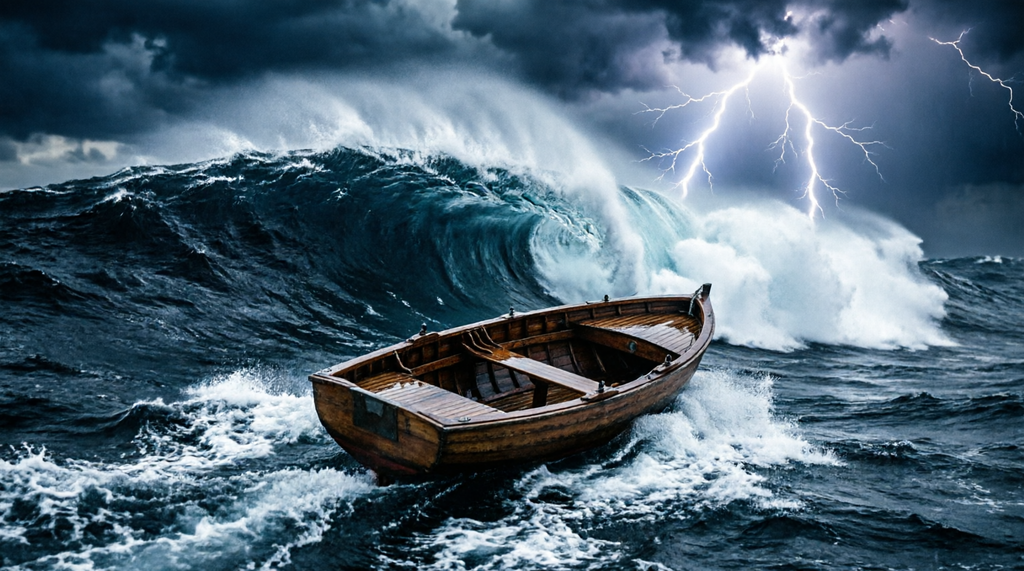
A metaphor for a treacherous situation is a figurative expression that describes a dangerous or uncertain situation by comparing it to something physically unsafe. Instead of saying a situation is simply “risky,” a metaphor helps readers see, feel, or imagine the danger, making the idea more vivid.
Simple definition
A treacherous situation is one that may be dangerous, unpredictable, deceptive, or difficult to handle.
A metaphor for a treacherous situation describes that danger indirectly.
For example:
“We are walking on thin ice.”
The people are probably not literally standing on frozen water. The phrase means they are in a delicate situation where one wrong move could cause serious trouble.
Another example is:
“The negotiation was a minefield.”
This does not mean the meeting was held in a real minefield. It means the situation contained many hidden risks and sensitive issues
What makes a metaphor “treacherous”?
The best metaphors for danger usually communicate at least one of these ideas:
- Hidden danger
- Uncertainty
- Instability
- Hostility
- Betrayal
- Fear
- A possible mistake
- A difficult escape
- Pressure
- Serious consequences
That is why “a minefield” feels different from “a storm.” Both suggest danger, but a minefield suggests hidden risks, while a storm suggests chaos and difficult conditions.
Why We Use a Metaphor for a Treacherous Situation

We use these metaphors because they turn an abstract idea such as risk or uncertainty into a picture that people can understand immediately. A phrase like “the situation was a minefield” can communicate hidden dangers, emotional tension, and the need for caution much faster than several literal sentences.
In everyday speech
People often use metaphors because they make ordinary conversations more expressive.
Instead of:
“I need to be very careful when I talk to my manager.”
Someone might say:
“I feel like I’m walking on thin ice with my manager.”
The second sentence gives the listener a stronger sense of danger.
In writing
Metaphors can make descriptions more memorable.
Instead of:
“The political situation was unstable.”
A writer might say:
“The country was sitting on a powder keg.”
The image suggests that a small event could cause a much larger problem.
In school
Students often use metaphors in:
- Essays
- Creative writing
- Poetry
- Book reports
- Personal narratives
- Speeches
A good metaphor can make an assignment more vivid without requiring complicated vocabulary.
On social media
Metaphors work well in short posts because they communicate a lot in very few words.
For example:
“That group chat is a minefield.”
The reader quickly understands that almost anything said there could cause conflict.
In professional communication
Metaphors can also help explain business risk.
For example:
“Entering that market without research would be like walking into a minefield.”
However, professional writers should avoid using overly dramatic metaphors when the subject requires a calm, factual tone.
60+ Metaphors for a Treacherous Situation
The best metaphor depends on what makes the situation dangerous. Some expressions focus on hidden risks. Others highlight instability, hostility, confusion, pressure, or the possibility of disaster.
Walking on Thin Ice
Meaning: You are in a risky or delicate situation where one mistake could cause serious trouble.
Real explanation: Thin ice can break without much warning. That makes this metaphor useful when someone must act carefully because the consequences of a wrong move could be severe.
Sample sentence:
“After missing the deadline twice, I was walking on thin ice with my boss.”
When to use it: Use it for delicate relationships, workplace problems, arguments, rules, or situations where another mistake could make things worse.
When NOT to use it: Avoid it when the situation is completely safe or when there is no real possibility of consequences.
Alternatives:
- On dangerous ground
- Taking a big risk
- Treading carefully
Difficulty: Easy
Tone: Informal to neutral
A Minefield
Meaning: A situation filled with hidden dangers or sensitive problems.
Real explanation: A real minefield may look quiet while hiding explosives underground. The metaphor captures situations where danger is not always obvious.
Sample sentence:
“Discussing money with the family was a minefield.”
When to use it: Use it for politics, relationships, office conflicts, negotiations, or sensitive discussions.
When NOT to use it: Do not use it for a simple inconvenience.
Alternatives:
- A danger zone
- Full of traps
- A risky situation
Difficulty: Easy
Tone: Neutral
A Snake Pit
Meaning: A hostile environment filled with dangerous, dishonest, or unfriendly people.
Real explanation: Snakes are often associated with hidden threats and sudden attacks. This metaphor focuses more on dangerous people than on difficult circumstances.
Sample sentence:
“The office felt like a snake pit after the promotion was announced.”
When to use it: Use it when people are competing, plotting, gossiping, or behaving aggressively.
When NOT to use it: Avoid it for a neutral workplace disagreement.
Alternatives:
- A hostile environment
- A den of enemies
- A toxic place
Difficulty: Easy
Tone: Informal
A Stormy Sea
Meaning: A difficult and unpredictable period.
Real explanation: A stormy sea is hard to navigate because conditions keep changing. This metaphor works well for emotional, financial, political, or personal trouble.
Sample sentence:
“The company is sailing through a stormy sea after losing its biggest customer.”
When to use it: Use it for long periods of uncertainty or hardship.
When NOT to use it: Avoid it when you need to emphasize one specific hidden danger.
Alternatives:
- Rough waters
- Turbulent times
- A difficult journey
Difficulty: Easy
Tone: Neutral
A House of Cards
Meaning: A fragile situation that could collapse from one small problem.
Real explanation: A house made from playing cards depends on careful balance. One disturbance can bring everything down.
Sample sentence:
“His financial plan was a house of cards.”
When to use it: Use it for weak plans, unstable systems, relationships, or businesses.
When NOT to use it: Do not use it when the main problem is hostility rather than instability.
Alternatives:
- A fragile system
- Built on shaky ground
- Ready to collapse
Difficulty: Easy
Tone: Neutral
A Tightrope
Meaning: A situation where you must maintain a difficult balance.
Real explanation: Walking a tightrope requires careful movement. One mistake can have serious consequences. The metaphor is excellent for situations involving competing demands.
Sample sentence:
“Managing both teams was a tightrope.”
When to use it: Use it for diplomacy, leadership, family conflict, and difficult decisions.
When NOT to use it: Avoid it if there is no need for balance.
Alternatives:
- A balancing act
- A delicate position
- A risky path
Difficulty: Easy
Tone: Neutral
A Ticking Time Bomb
Meaning: A dangerous problem that may suddenly become much worse.
Real explanation: The image suggests that trouble is already developing and that there may be limited time to prevent it.
Sample sentence:
“The unpaid debt was a ticking time bomb.”
When to use it: Use it when danger is building and a crisis seems likely.
When NOT to use it: Avoid it when the problem is minor or harmless.
Alternatives:
- A crisis waiting to happen
- A disaster waiting to happen
- A growing threat
Difficulty: Easy
Tone: Strong, informal to neutral
A Battlefield
Meaning: A place or situation marked by intense conflict.
Real explanation: This metaphor presents disagreement as a battle. It is useful when people or groups are strongly opposed.
Sample sentence:
“The courtroom became a battlefield between the two companies.”
When to use it: Use it for serious disputes and strong competition.
When NOT to use it: Avoid it for friendly disagreements.
Alternatives:
- A battleground
- A war zone
- A conflict zone
Difficulty: Easy
Tone: Strong
A Dark Forest
Meaning: An unfamiliar, confusing, and potentially dangerous situation.
Real explanation: A dark forest hides what lies ahead. This metaphor emphasizes uncertainty and fear.
Sample sentence:
“Starting the new business felt like entering a dark forest.”
When to use it: Use it for unfamiliar experiences or uncertain journeys.
When NOT to use it: Avoid it when the danger is already obvious.
Alternatives:
- Uncharted territory
- The unknown
- A confusing path
Difficulty: Easy
Tone: Literary
A Slippery Slope
Meaning: A situation where one questionable action may lead to increasingly serious problems.
Real explanation: The image suggests that once you start moving downhill, stopping becomes harder.
Sample sentence:
“Borrowing money to pay off another loan put him on a slippery slope.”
When to use it: Use it when one decision could lead to a chain of worse decisions.
When NOT to use it: Do not use it when there is only one isolated risk.
Alternatives:
- A dangerous path
- A downward spiral
- A risky direction
Difficulty: Easy
Tone: Neutral
A Hornet’s Nest
Meaning: A situation where one action can provoke many angry reactions.
Real explanation: Disturbing a hornet’s nest can bring a sudden attack. The metaphor describes situations where touching one issue may create much larger trouble.
Sample sentence:
“Questioning the old policy opened a hornet’s nest.”
When to use it: Use it for controversial subjects or sensitive disputes.
When NOT to use it: Avoid it when nobody is likely to react strongly.
Alternatives:
- Stirring up trouble
- A sensitive issue
- A dangerous controversy
Difficulty: Easy
Tone: Informal
A Powder Keg
Meaning: A situation containing built-up tension that could explode suddenly.
Real explanation: A powder keg stores explosive material. As a metaphor, it suggests that conflict has been building and only a small spark may be needed.
Sample sentence:
“The neighborhood was a powder keg after months of arguments.”
When to use it: Use it for social conflict, political tension, or emotional situations.
When NOT to use it: Avoid it for ordinary stress.
Alternatives:
- A pressure cooker
- A brewing crisis
- A volatile situation
Difficulty: Medium
Tone: Strong
A Pressure Cooker
Meaning: A situation where stress keeps building until someone may lose control.
Real explanation: Pressure cookers hold pressure inside. The metaphor focuses on emotional or social pressure rather than hidden physical danger.
Sample sentence:
“The team was a pressure cooker after three failed launches.”
When to use it: Use it for workplaces, families, teams, or tense environments.
When NOT to use it: Avoid it when the situation is calm.
Alternatives:
- A tense environment
- Building pressure
- A boiling situation
Difficulty: Easy
Tone: Informal to neutral
A Trap
Meaning: A situation that appears safe or attractive but may cause trouble.
Real explanation: A trap is designed to catch someone who does not see the danger. This metaphor works especially well for deceptive offers or choices.
Sample sentence:
“The cheap contract was actually a trap.”
When to use it: Use it when something is misleading.
When NOT to use it: Do not use it for obvious danger.
Alternatives:
- A setup
- A snare
- A deceptive situation
Difficulty: Very easy
Tone: Neutral
A Booby Trap
Meaning: A hidden danger designed to cause harm when someone takes a particular action.
Real explanation: The metaphor is stronger than simply saying “a trap” because it suggests that the danger is concealed.
Sample sentence:
“That friendly offer turned out to be a booby trap.”
When to use it: Use it for situations where danger is intentionally hidden.
When NOT to use it: Avoid it in formal writing about serious real-world violence unless the context clearly supports the comparison.
Alternatives:
- A hidden trap
- A setup
- A concealed danger
Difficulty: Medium
Tone: Informal
A Dangerous Crossing
Meaning: A difficult transition that requires care.
Real explanation: Crossing a dangerous place suggests moving from one condition to another while facing risk.
Sample sentence:
“Changing careers at forty felt like a dangerous crossing.”
When to use it: Use it for major life transitions.
When NOT to use it: Avoid it for tiny changes.
Alternatives:
- A risky transition
- A difficult passage
- A perilous journey
Difficulty: Medium
Tone: Literary
A Razor’s Edge
Meaning: A situation in which the difference between success and failure is extremely small.
Real explanation: A razor’s edge is extremely narrow. The metaphor emphasizes how little room there is for error.
Sample sentence:
“The company was living on a razor’s edge.”
When to use it: Use it for high-stakes decisions and unstable conditions.
When NOT to use it: Avoid it for ordinary uncertainty.
Alternatives:
- A narrow margin
- A fine line
- A critical balance
Difficulty: Medium
Tone: Literary
A Perilous Path
Meaning: A course of action that may lead to danger or serious trouble.
Real explanation: The word “perilous” already means dangerous, while “path” gives the reader a picture of moving forward toward an uncertain result.
Sample sentence:
“Ignoring the warning signs could put the company on a perilous path.”
When to use it: Use it in essays, speeches, articles, and serious writing.
When NOT to use it: It can sound too formal for casual texting.
Alternatives:
- A dangerous road
- A risky course
- A hazardous direction
Difficulty: Medium
Tone: Formal
A Treacherous Road
Meaning: A difficult course filled with danger or unexpected problems.
Real explanation: The road represents a journey, while “treacherous” suggests that the journey may contain hidden hazards.
Sample sentence:
“Recovering the business will be a treacherous road.”
When to use it: Use it for long-term challenges.
When NOT to use it: Avoid it for a small problem.
Alternatives:
- A dangerous journey
- A difficult road
- A risky route
Difficulty: Easy
Tone: Neutral
A Dead-End Alley
Meaning: A situation that may leave you with no good way forward.
Real explanation: An alley with no exit represents choices that eventually stop progress.
Sample sentence:
“Taking another loan felt like entering a dead-end alley.”
When to use it: Use it when options are disappearing.
When NOT to use it: Avoid it when many good choices remain.
Alternatives:
- A dead end
- A blocked path
- Nowhere to turn
Difficulty: Easy
Tone: Informal
A Quicksand Pit
Meaning: A situation that becomes harder to escape the more you struggle with it.
Real explanation: Quicksand creates a strong image of becoming trapped. The metaphor is useful for problems that grow worse through repeated attempts to fix them.
Sample sentence:
“The argument became a quicksand pit of accusations.”
When to use it: Use it for complicated conflicts or problems.
When NOT to use it: Avoid it when escape is simple.
Alternatives:
- A trap
- A downward spiral
- A problem that keeps growing
Difficulty: Medium
Tone: Vivid
A Whirlpool
Meaning: A confusing situation that pulls people deeper into trouble.
Real explanation: A whirlpool spins and pulls objects inward. This metaphor suggests that events are moving beyond someone’s control.
Sample sentence:
“She was caught in a whirlpool of family conflict.”
When to use it: Use it for emotional, social, or financial problems.
When NOT to use it: Avoid it when the situation is steady.
Alternatives:
- A downward spiral
- A cycle of trouble
- A vortex of problems
Difficulty: Medium
Tone: Literary
A Wildfire
Meaning: A problem or conflict that spreads quickly and becomes difficult to control.
Real explanation: A wildfire can move rapidly across a large area. The metaphor focuses on speed and loss of control.
Sample sentence:
“The rumor spread through the school like a wildfire.”
When to use it: Use it for rumors, conflicts, scandals, or rapidly growing problems.
When NOT to use it: Avoid it when the problem is contained.
Alternatives:
- Spreading crisis
- Rapidly growing problem
- Runaway conflict
Difficulty: Easy
Tone: Neutral
A Volcanic Situation
Meaning: A situation that looks quiet but contains powerful tension beneath the surface.
Real explanation: A volcano can remain quiet while pressure builds underground. The metaphor is useful when anger or conflict has not yet erupted.
Sample sentence:
“The team was a volcanic situation waiting for one final argument.”
When to use it: Use it for suppressed anger or tension.
When NOT to use it: Avoid it for situations with no emotional pressure.
Alternatives:
- Building tension
- A brewing crisis
- A volcano waiting to erupt
Difficulty: Medium
Tone: Vivid
A Volcano Waiting to Erupt
Meaning: A tense situation that may suddenly become explosive.
Real explanation: This metaphor makes the potential crisis especially clear. It suggests that the danger has not happened yet but may be close.
Sample sentence:
“The marriage was a volcano waiting to erupt.”
When to use it: Use it when tension is close to breaking point.
When NOT to use it: Avoid it when there is no sign of rising tension.
Alternatives:
- Ready to explode
- A brewing crisis
- A breaking point
Difficulty: Easy
Tone: Strong
A Loaded Gun
Meaning: A situation containing serious potential danger.
Real explanation: This is a very strong metaphor. It suggests that the danger is present and could be activated quickly.
Sample sentence:
“That unresolved dispute was a loaded gun.”
When to use it: Use it carefully in dramatic writing.
When NOT to use it: Avoid it in casual professional communication unless the context clearly calls for strong language.
Alternatives:
- A serious threat
- A dangerous situation
- A disaster waiting to happen
Difficulty: Medium
Tone: Strong
A House Built on Sand
Meaning: A plan or situation lacks a strong foundation and may fail.
Real explanation: Sand does not provide the stable foundation needed for a strong structure. The metaphor focuses on weakness beneath the surface.
Sample sentence:
“Their business model was a house built on sand.”
When to use it: Use it for weak plans, relationships, or systems.
When NOT to use it: Avoid it when the main problem is immediate danger.
Alternatives:
- Built on shaky ground
- Fundamentally weak
- Unstable foundation
Difficulty: Medium
Tone: Literary
Shaky Ground
Meaning: An uncertain or unsafe position.
Real explanation: Physical ground that shakes cannot be trusted. The metaphor transfers that feeling to relationships, decisions, arguments, or plans.
Sample sentence:
“After the accusation, their friendship was on shaky ground.”
When to use it: Use it for uncertain relationships or unstable situations.
When NOT to use it: Avoid it if the situation is clearly secure.
Alternatives:
- Unstable position
- Uncertain footing
- Dangerous territory
Difficulty: Easy
Tone: Neutral
Dangerous Territory
Meaning: A subject, situation, or action that could cause serious problems.
Real explanation: Territory usually means a physical area. Here, it represents an area of behavior, discussion, or decision-making that carries risk.
Sample sentence:
“Bringing up his past was dangerous territory.”
When to use it: Excellent for sensitive conversations.
When NOT to use it: Avoid it when the subject is harmless.
Alternatives:
- Sensitive ground
- Risky territory
- A touchy subject
Difficulty: Easy
Tone: Neutral
Uncharted Waters
Meaning: A situation that is unfamiliar and difficult to predict.
Real explanation: Sailors entering unknown waters cannot be sure what dangers lie ahead. The metaphor emphasizes lack of experience rather than deliberate hostility.
Sample sentence:
“Becoming a parent for the first time felt like entering uncharted waters.”
When to use it: Use it for new experiences.
When NOT to use it: Avoid it if the person has handled the same situation many times.
Alternatives:
- The unknown
- New territory
- An unfamiliar path
Difficulty: Easy
Tone: Neutral
Rough Waters
Meaning: A period of difficulty, conflict, or instability.
Real explanation: Rough water makes travel harder. The metaphor is less dramatic than “a battlefield” but still communicates trouble.
Sample sentence:
“Our partnership has hit rough waters.”
When to use it: Use it for relationships, companies, teams, or difficult periods.
When NOT to use it: Avoid it if you need to emphasize hidden danger.
Alternatives:
- Difficult times
- Turbulent conditions
- A rocky period
Difficulty: Easy
Tone: Neutral
A Rocky Road
Meaning: A journey filled with difficulties.
Real explanation: Rocks make a road uncomfortable and difficult to travel. The metaphor focuses on obstacles rather than sudden danger.
Sample sentence:
“The road to recovery was rocky.”
When to use it: Use it for long-term struggles.
When NOT to use it: Avoid it when the situation is immediately dangerous.
Alternatives:
- A difficult journey
- A rough path
- A challenging road
Difficulty: Easy
Tone: Neutral
A Thorny Path
Meaning: A difficult route filled with painful or complicated problems.
Real explanation: Thorns can hurt travelers. The metaphor gives difficulty a physical image without making the situation sound as violent as a battlefield.
Sample sentence:
“Negotiating the divorce was a thorny path.”
When to use it: Use it for complicated personal or legal situations.
When NOT to use it: Avoid it for very simple problems.
Alternatives:
- A difficult path
- A complicated route
- A painful journey
Difficulty: Medium
Tone: Literary
A Maze
Meaning: A confusing situation where it is difficult to find the right way forward.
Real explanation: A maze has many turns and can make people lose their sense of direction. This metaphor emphasizes confusion more than physical danger.
Sample sentence:
“The new regulations created a maze for small businesses.”
When to use it: Use it for complicated systems or decisions.
When NOT to use it: Avoid it if the problem is simple and direct.
Alternatives:
- A confusing web
- A complicated puzzle
- A tangled situation
Difficulty: Easy
Tone: Neutral
A Labyrinth
Meaning: An extremely complicated situation that is difficult to navigate.
Real explanation: A labyrinth is similar to a maze but often sounds more literary and complex.
Sample sentence:
“Trying to settle the inheritance became a labyrinth of legal problems.”
When to use it: Use it in essays, books, and sophisticated descriptions.
When NOT to use it: It may be too formal for casual speech.
Alternatives:
- A complex maze
- A tangled web
- A complicated path
Difficulty: Medium
Tone: Formal/Literary
A Tangled Web
Meaning: A complicated situation in which many problems are connected.
Real explanation: A web has many connected threads. Once tangled, it becomes hard to separate them.
Sample sentence:
“The company found itself in a tangled web of contracts.”
When to use it: Use it for complicated relationships, lies, rules, or obligations.
When NOT to use it: Avoid it for one simple problem.
Alternatives:
- A complicated mess
- A web of problems
- A confusing network
Difficulty: Easy
Tone: Neutral
A Web of Lies
Meaning: A situation built around many connected false statements.
Real explanation: Each lie can connect to another, making the whole situation harder to escape.
Sample sentence:
“His story became a web of lies.”
When to use it: Use it when deception is central to the problem.
When NOT to use it: Do not use it unless dishonesty is actually involved.
Alternatives:
- A chain of lies
- A false story
- A deceptive scheme
Difficulty: Easy
Tone: Strong
A Lion’s Den
Meaning: A dangerous place or situation where a person is surrounded by powerful opposition.
Real explanation: Entering a lion’s den creates the image of knowingly stepping into danger.
Sample sentence:
“Walking into that meeting alone felt like entering a lion’s den.”
When to use it: Use it for hostile meetings or environments.
When NOT to use it: Avoid it for ordinary disagreements.
Alternatives:
- Hostile territory
- Enemy territory
- A dangerous place
Difficulty: Easy
Tone: Dramatic
A Den of Wolves
Meaning: A hostile group or environment where people may take advantage of you.
Real explanation: Wolves create an image of a threatening group. This metaphor focuses on social danger.
Sample sentence:
“He felt like a stranger walking into a den of wolves.”
When to use it: Use it for hostile groups.
When NOT to use it: Avoid it when people are merely competitive.
Alternatives:
- A hostile crowd
- A dangerous group
- A hostile environment
Difficulty: Medium
Tone: Dramatic
A Cage
Meaning: A situation that feels restrictive and difficult to escape.
Real explanation: A cage prevents freedom of movement. The metaphor works when a person feels trapped by circumstances.
Sample sentence:
“Debt had become a cage around her choices.”
When to use it: Use it for restrictive circumstances.
When NOT to use it: Avoid it if the person has plenty of freedom.
Alternatives:
- A trap
- A prison
- A restrictive situation
Difficulty: Easy
Tone: Emotional
A Prison
Meaning: A situation that severely limits freedom or choices.
Real explanation: Unlike a cage, “prison” can suggest not only restriction but also emotional or psychological confinement.
Sample sentence:
“Fear became a prison that kept him from leaving.”
When to use it: Use it for powerful emotional or social restrictions.
When NOT to use it: Avoid it when the limitation is temporary and minor.
Alternatives:
- A cage
- A trap
- A confinement
Difficulty: Easy
Tone: Strong
A Narrow Bridge
Meaning: A difficult situation where there is very little room for error.
Real explanation: A narrow bridge requires careful movement because there is little space to recover from a mistake.
Sample sentence:
“Keeping both sides happy was a narrow bridge.”
When to use it: Use it for delicate negotiations.
When NOT to use it: Avoid it if there are many safe options.
Alternatives:
- A fine line
- A delicate balance
- A narrow path
Difficulty: Medium
Tone: Neutral
A Fine Line
Meaning: A very small difference between two outcomes, behaviors, or choices.
Real explanation: A fine line can separate something acceptable from something harmful.
Sample sentence:
“There is a fine line between confidence and arrogance.”
When to use it: Use it for judgment calls and delicate behavior.
When NOT to use it: Avoid it when the two choices are clearly different.
Alternatives:
- A narrow margin
- A delicate boundary
- A thin boundary
Difficulty: Easy
Tone: Neutral
A Knife Edge
Meaning: An extremely tense or unstable situation.
Real explanation: A knife edge is narrow and dangerous. The expression suggests that there is almost no room for mistakes.
Sample sentence:
“The peace agreement was balanced on a knife edge.”
When to use it: Use it for high-stakes situations.
When NOT to use it: Avoid it for mild uncertainty.
Alternatives:
- Razor’s edge
- Critical balance
- Dangerous position
Difficulty: Medium
Tone: Strong
A House on Fire
Meaning: A situation that is rapidly becoming chaotic or dangerous.
Real explanation: A burning house creates urgency because the problem is spreading quickly and requires immediate action.
Sample sentence:
“The project was a house on fire after the main server failed.”
When to use it: Use it for fast-moving crises.
When NOT to use it: Avoid it when there is no urgency.
Alternatives:
- A crisis
- A disaster scene
- Out of control
Difficulty: Easy
Tone: Dramatic
A Runaway Train
Meaning: A situation that is moving toward danger and is becoming difficult to stop.
Real explanation: A runaway train has momentum and little control. This makes it a strong metaphor for escalating problems.
Sample sentence:
“The argument became a runaway train.”
When to use it: Use it when events are escalating quickly.
When NOT to use it: Avoid it when the situation remains under control.
Alternatives:
- Out of control
- Gaining momentum
- An escalating crisis
Difficulty: Easy
Tone: Vivid
A Car Without Brakes
Meaning: A situation that is moving forward without enough control.
Real explanation: The image suggests speed combined with the inability to stop.
Sample sentence:
“The company was spending money like a car without brakes.”
When to use it: Use it for uncontrolled behavior or rapid decline.
When NOT to use it: Avoid it when the situation can easily be stopped.
Alternatives:
- Out of control
- Unchecked momentum
- A runaway situation
Difficulty: Easy
Tone: Informal
A Broken Dam
Meaning: A situation in which pressure suddenly escapes and creates a large problem.
Real explanation: A dam holds back water. When it breaks, the stored pressure can rush forward all at once.
Sample sentence:
“Years of resentment finally broke the dam.”
When to use it: Use it for emotional release or sudden escalation.
When NOT to use it: Avoid it when pressure has not been building.
Alternatives:
- A flood of emotion
- A sudden eruption
- A release of pressure
Difficulty: Medium
Tone: Literary
A Flood
Meaning: An overwhelming amount of trouble, information, emotion, or demands.
Real explanation: Floodwater can arrive faster than people can manage it. This makes the metaphor useful for situations that overwhelm someone.
Sample sentence:
“After the announcement, we faced a flood of complaints.”
When to use it: Use it when problems arrive in large numbers.
When NOT to use it: Avoid it for one isolated problem.
Alternatives:
- An overwhelming wave
- A rush of problems
- A deluge
Difficulty: Easy
Tone: Neutral
A Tsunami
Meaning: A huge and overwhelming event that causes widespread disruption.
Real explanation: This metaphor emphasizes enormous scale and force.
Sample sentence:
“The scandal created a tsunami of criticism.”
When to use it: Use it for very large waves of reaction or change.
When NOT to use it: Avoid it when discussing real disasters casually or for trivial problems.
Alternatives:
- A massive wave
- An overwhelming force
- A huge surge
Difficulty: Easy
Tone: Strong
A Dark Tunnel
Meaning: A difficult period where the way forward is unclear.
Real explanation: A dark tunnel limits visibility. You know there may be an exit, but you cannot easily see it.
Sample sentence:
“After losing his job, he felt stuck in a dark tunnel.”
When to use it: Use it for emotional or uncertain periods.
When NOT to use it: Avoid it if the outcome is already obvious.
Alternatives:
- A difficult period
- A dark road
- An uncertain journey
Difficulty: Easy
Tone: Emotional
A Cliff Edge
Meaning: A situation that is extremely close to a serious negative outcome.
Real explanation: Standing at a cliff edge leaves little room for a mistake.
Sample sentence:
“The company was standing at the cliff edge of bankruptcy.”
When to use it: Use it for very serious danger.
When NOT to use it: Avoid it for small risks.
Alternatives:
- The brink
- The edge of disaster
- A critical point
Difficulty: Easy
Tone: Strong
The Brink
Meaning: A point very close to a major event, often something bad.
Real explanation: “On the brink” suggests that the outcome is close but has not happened yet.
Sample sentence:
“The two sides were on the brink of conflict.”
When to use it: Use it in formal and informal writing.
When NOT to use it: Avoid it when the event is not actually close.
Alternatives:
- On the edge
- Near disaster
- At a critical point
Difficulty: Medium
Tone: Neutral/Formal
A Point of No Return
Meaning: A stage after which reversing the decision or situation becomes extremely difficult.
Real explanation: This metaphor emphasizes finality rather than hidden danger.
Sample sentence:
“Signing the agreement felt like reaching a point of no return.”
When to use it: Use it for irreversible decisions.
When NOT to use it: Avoid it when changing direction remains easy.
Alternatives:
- No turning back
- An irreversible step
- The final threshold
Difficulty: Easy
Tone: Strong
A Burning Bridge
Meaning: A relationship, opportunity, or option that has been destroyed so it cannot easily be restored.
Real explanation: A bridge connects two sides. Burning it removes the route back.
Sample sentence:
“Quitting angrily meant burning a bridge with his former employer.”
When to use it: Use it when discussing damaged relationships or lost opportunities.
When NOT to use it: Avoid it when reconciliation remains easy.
Alternatives:
- Closing the door
- Destroying an opportunity
- Cutting off a connection
Difficulty: Easy
Tone: Neutral
A Broken Compass
Meaning: A situation in which you no longer know which direction to take.
Real explanation: A compass normally gives direction. A broken one leaves travelers uncertain.
Sample sentence:
“Without reliable advice, I felt like I had a broken compass.”
When to use it: Use it for confusion and uncertainty.
When NOT to use it: Avoid it when the problem is clearly defined.
Alternatives:
- Lost direction
- No clear path
- Without guidance
Difficulty: Easy
Tone: Literary
A Fog
Meaning: A situation in which facts, intentions, or choices are unclear.
Real explanation: Fog limits visibility. The metaphor transfers that lack of visibility to thoughts, plans, or circumstances.
Sample sentence:
“After the announcement, the future was a fog.”
When to use it: Use it for uncertainty.
When NOT to use it: Avoid it when the facts are clear.
Alternatives:
- Uncertainty
- Confusion
- Lack of clarity
Difficulty: Easy
Tone: Literary
A Blind Alley
Meaning: A course of action that leads nowhere.
Real explanation: A blind alley has no useful exit. The metaphor suggests wasted effort or a dead-end decision.
Sample sentence:
“That investigation became a blind alley.”
When to use it: Use it for failed approaches.
When NOT to use it: Avoid it when the path may still succeed.
Alternatives:
- Dead end
- Fruitless path
- Nowhere to go
Difficulty: Easy
Tone: Neutral
A Thorn in the Side
Meaning: A persistent problem that keeps causing trouble.
Real explanation: A thorn causes repeated discomfort even when the larger situation seems manageable.
Sample sentence:
“That unresolved complaint became a thorn in the company’s side.”
When to use it: Use it for ongoing irritation or difficulty.
When NOT to use it: Avoid it for sudden major danger.
Alternatives:
- Persistent problem
- Constant nuisance
- Ongoing obstacle
Difficulty: Easy
Tone: Informal to neutral
A Storm Brewing
Meaning: Trouble is developing even though it has not fully arrived.
Real explanation: Dark clouds can warn of an approaching storm. The metaphor suggests signs that conflict or crisis may soon appear.
Sample sentence:
“There was a storm brewing between the two departments.”
When to use it: Use it when warning signs are visible.
When NOT to use it: Avoid it if there are no signs of future trouble.
Alternatives:
- Trouble is coming
- A crisis is developing
- Tension is building
Difficulty: Easy
Tone: Neutral
A Gathering Storm
Meaning: A serious problem that is gradually becoming more likely or intense.
Real explanation: Unlike “a storm brewing,” this expression often suggests that the threat is becoming increasingly difficult to ignore.
Sample sentence:
“The rising costs were a gathering storm for the business.”
When to use it: Use it for developing crises.
When NOT to use it: Avoid it for short-lived problems.
Alternatives:
- Growing threat
- Building crisis
- Rising danger
Difficulty: Medium
Tone: Formal/Literary
A Time Bomb Under the Floor
Meaning: A hidden problem that could cause serious damage later.
Real explanation: The image combines secrecy and danger. People may walk over the problem without realizing it is there.
Sample sentence:
“The unpaid taxes were a time bomb under the floor.”
When to use it: Use it for hidden risks.
When NOT to use it: Avoid it when everyone already knows about the danger.
Alternatives:
- Hidden threat
- Buried problem
- Disaster waiting to happen
Difficulty: Medium
Tone: Dramatic
A Sleeping Giant
Meaning: A powerful threat or force that has not yet become active.
Real explanation: The giant is powerful but currently inactive. The metaphor can describe a conflict, competitor, or problem that may become important later.
Sample sentence:
“The unresolved dispute was a sleeping giant.”
When to use it: Use it when potential power or danger is present but quiet.
When NOT to use it: Avoid it when the threat is already active.
Alternatives:
- Hidden force
- Dormant threat
- Untapped danger
Difficulty: Easy
Tone: Dramatic
A Loaded Spring
Meaning: A situation holding back energy or tension that could suddenly be released.
Real explanation: A compressed spring stores energy. The metaphor suggests pressure waiting for release.
Sample sentence:
“The classroom felt like a loaded spring before the exam results.”
When to use it: Use it for nervousness and emotional tension.
When NOT to use it: Avoid it for long-term instability without immediate pressure.
Alternatives:
- Coiled tension
- Built-up pressure
- Ready to snap
Difficulty: Medium
Tone: Literary
A Coiled Snake
Meaning: A quiet situation that may suddenly become dangerous.
Real explanation: A coiled snake may appear still but can strike quickly. The metaphor focuses on hidden readiness.
Sample sentence:
“The disagreement was a coiled snake waiting for someone to speak.”
When to use it: Use it for quiet hostility.
When NOT to use it: Avoid it when there is no threat.
Alternatives:
- Hidden threat
- Waiting danger
- Quiet hostility
Difficulty: Medium
Tone: Dramatic
A Glass Floor
Meaning: A situation that looks stable but feels dangerously fragile.
Real explanation: Glass appears solid but can break. The metaphor emphasizes uncertainty beneath someone’s position.
Sample sentence:
“Her position at the company felt like a glass floor.”
When to use it: Use it for fragile success or unstable status.
When NOT to use it: Avoid it when the foundation is genuinely strong.
Alternatives:
- Fragile position
- Unstable footing
- Weak foundation
Difficulty: Medium
Tone: Creative
A House with Cracks
Meaning: A situation that appears fine but has serious weaknesses.
Real explanation: Cracks in a house may signal deeper structural problems. The metaphor is useful for organizations, relationships, or plans.
Sample sentence:
“Their perfect-looking partnership was a house with cracks.”
When to use it: Use it when hidden weaknesses are beginning to show.
When NOT to use it: Avoid it if there are no underlying problems.
Alternatives:
- Crumbling foundation
- Hidden weakness
- Fragile structure
Difficulty: Easy
Tone: Neutral
A Crumbling Bridge
Meaning: A connection or situation that is becoming unsafe and may soon fail.
Real explanation: A bridge must support people while they cross. A crumbling bridge suggests that continuing may be dangerous.
Sample sentence:
“Their trust was a crumbling bridge.”
When to use it: Use it for damaged relationships or failing cooperation.
When NOT to use it: Avoid it when the relationship is healthy.
Alternatives:
- Failing connection
- Damaged relationship
- Weak link
Difficulty: Medium
Tone: Literary
A Broken Raft
Meaning: A fragile means of surviving a difficult situation.
Real explanation: A raft may keep someone afloat, but a broken raft offers little protection. The metaphor suggests that the available solution is weak.
Sample sentence:
“Our backup plan was a broken raft in a rising flood.”
When to use it: Use it for weak emergency plans.
When NOT to use it: Avoid it when the solution is reliable.
Alternatives:
- Weak safety net
- Fragile solution
- Last resort
Difficulty: Medium
Tone: Creative
A Leaking Boat
Meaning: A situation with ongoing problems that threaten eventual failure.
Real explanation: A boat can continue moving while slowly taking on water. This makes the metaphor useful for organizations or relationships that look functional but have serious problems.
Sample sentence:
“The company was a leaking boat pretending everything was fine.”
When to use it: Use it for slow deterioration.
When NOT to use it: Avoid it for sudden disasters.
Alternatives:
- Failing system
- Slow crisis
- Weak structure
Difficulty: Easy
Tone: Vivid
A Ship in a Hurricane
Meaning: A person or organization facing extreme pressure and uncertainty.
Real explanation: A ship must survive powerful forces while trying to stay on course.
Sample sentence:
“Leading the company through the scandal was like steering a ship in a hurricane.”
When to use it: Use it for major crises.
When NOT to use it: Avoid it for small problems.
Alternatives:
- Fighting a major storm
- Facing extreme pressure
- Battling chaos
Difficulty: Medium
Tone: Dramatic
A Broken Rudder
Meaning: A situation where progress continues but direction is no longer under control.
Real explanation: A rudder helps steer a ship. Without it, movement can continue without proper direction.
Sample sentence:
“The team had money and talent but operated like a ship with a broken rudder.”
When to use it: Use it for organizations that lack leadership or direction.
When NOT to use it: Avoid it when the problem is lack of resources rather than direction.
Alternatives:
- No clear direction
- Lost control
- Without guidance
Difficulty: Medium
Tone: Literary
A Dangerous Game
Meaning: An action or situation that carries serious risks.
Real explanation: Calling something a “game” while describing danger creates a contrast. It suggests that people may be playing with consequences they do not fully understand.
Sample sentence:
“Lying to both sides was a dangerous game.”
When to use it: Use it for risky behavior.
When NOT to use it: Avoid it when there is no meaningful risk.
Alternatives:
- Risky business
- High-stakes move
- Serious gamble
Difficulty: Easy
Tone: Neutral
A High-Wire Act
Meaning: A difficult performance or situation where one mistake could cause failure.
Real explanation: A high-wire performer must remain balanced far above the ground. The metaphor emphasizes skill, pressure, and risk.
Sample sentence:
“Keeping the two investors happy was a high-wire act.”
When to use it: Use it for difficult balancing situations.
When NOT to use it: Avoid it when the task is easy.
Alternatives:
- Balancing act
- Tightrope walk
- Delicate operation
Difficulty: Medium
Tone: Neutral
A Gamble with the Future
Meaning: A decision that puts future success at significant risk.
Real explanation: Gambling involves uncertain outcomes. This metaphor directly connects a risky decision with possible future consequences.
Sample sentence:
“Leaving school without a plan felt like a gamble with the future.”
When to use it: Use it for major uncertain choices.
When NOT to use it: Avoid it when the decision is based on strong evidence and low risk.
Alternatives:
- A risky bet
- A dangerous choice
- A high-stakes decision
Difficulty: Easy
Tone: Neutral
A House of Dominos
Meaning: A fragile situation where one failure may trigger several others.
Real explanation: When one domino falls, it can knock down the next. This metaphor focuses on chain reactions.
Sample sentence:
“The missed payment started a house of dominos.”
When to use it: Use it when one problem can trigger many more.
When NOT to use it: Avoid it if events are unrelated.
Alternatives:
- Chain reaction
- Cascade of problems
- One failure after another
Difficulty: Easy
Tone: Neutral
A Domino Effect
Meaning: A chain of events in which one problem causes another.
Real explanation: This is one of the clearest metaphors for escalating consequences.
Sample sentence:
“The first resignation created a domino effect across the department.”
When to use it: Use it in everyday and professional writing.
When NOT to use it: Avoid it when events happen independently.
Alternatives:
- Chain reaction
- Cascade
- Ripple effect
Difficulty: Very easy
Tone: Neutral
A Falling Ceiling
Meaning: A situation where danger seems to be closing in from above.
Real explanation: A ceiling normally provides safety. A falling ceiling reverses that expectation and creates a sense of immediate danger.
Sample sentence:
“The legal pressure felt like a falling ceiling.”
When to use it: Use it in creative or emotional writing.
When NOT to use it: Avoid it in plain business writing.
Alternatives:
- Closing danger
- Mounting pressure
- Trouble closing in
Difficulty: Medium
Tone: Creative
A Cage of Expectations
Meaning: A situation where social or personal expectations limit someone’s choices.
Real explanation: The cage represents restriction, while expectations create the invisible bars.
Sample sentence:
“Her family’s expectations became a cage.”
When to use it: Use it for emotional or social pressure.
When NOT to use it: Avoid it if expectations are helpful rather than restrictive.
Alternatives:
- Pressure trap
- Restrictive expectations
- Emotional prison
Difficulty: Medium
Tone: Emotional
A Minefield of Words
Meaning: A conversation where almost anything said could create conflict.
Real explanation: This is especially useful when the danger comes from language itself.
Sample sentence:
“Talking about the old breakup was a minefield of words.”
When to use it: Use it for sensitive conversations.
When NOT to use it: Avoid it for ordinary chats.
Alternatives:
- Sensitive conversation
- Verbal minefield
- Delicate discussion
Difficulty: Easy
Tone: Creative
A Chessboard Full of Traps
Meaning: A strategic situation where every move may have consequences.
Real explanation: Chess requires players to think ahead. Adding “traps” makes the situation feel more dangerous and unpredictable.
Sample sentence:
“The negotiation was a chessboard full of traps.”
When to use it: Use it for strategy, politics, business, or competition.
When NOT to use it: Avoid it when no strategic thinking is involved.
Alternatives:
- Strategic minefield
- Game of traps
- High-stakes strategy
Difficulty: Medium
Tone: Neutral
A Game of Jenga
Meaning: A fragile situation where removing or changing one part may cause everything to collapse.
Real explanation: Jenga depends on structural balance. One wrong move can bring down the entire tower.
Sample sentence:
“Managing the budget felt like a game of Jenga.”
When to use it: Use it for fragile systems and complicated decisions.
When NOT to use it: Avoid it for situations without interconnected parts.
Alternatives:
- Fragile balance
- House of cards
- Delicate structure
Difficulty: Easy
Tone: Informal
A Balancing Act Over a Pit
Meaning: A highly risky situation where balance must be maintained under serious pressure.
Real explanation: This combines the idea of balance with a dangerous consequence if balance is lost.
Sample sentence:
“Leading the two rival teams was a balancing act over a pit.”
When to use it: Use it in creative writing or strong descriptive prose.
When NOT to use it: Avoid it when a simple expression would be clearer.
Alternatives:
- Dangerous balancing act
- High-wire situation
- Fine-line decision
Difficulty: Medium
Tone: Literary
Real-Life Conversations
The best way to understand a metaphor is to hear it in a normal conversation. These examples show how people might actually use treacherous-situation metaphors without making the dialogue sound like a textbook.
Conversation Between Friends
Maya: “Did you talk to Daniel about what happened?”
Chris: “Not yet.”
Maya: “Why not?”
Chris: “Because that conversation is a minefield. If I say the wrong thing, he’ll get angry.”
Maya: “Fair. Maybe just keep it simple.”
Chris: “Exactly. I’m already walking on thin ice with him.”
Why these metaphors work: “Minefield” shows that many parts of the conversation are risky, while “walking on thin ice” shows that Chris already has a fragile relationship with Daniel.
Family Conversation
Mom: “Are you really going to sell the house?”
Sarah: “I’m thinking about it.”
Mom: “That’s going to open a hornet’s nest.”
Sarah: “I know. Everyone has an opinion.”
Mom: “Then be careful. This is dangerous territory.”
Sarah: “You’re right. I’ll talk to everyone before making a decision.”
Why these metaphors work: The situation is not physically dangerous. The danger comes from emotional reactions and family disagreement.
Student Conversation
Liam: “Did you ask Professor Reed for another extension?”
Noah: “Not yet.”
Liam: “You should.”
Noah: “I’m walking on thin ice already. I don’t want to push it.”
Liam: “Maybe explain what happened instead of making another excuse.”
Noah: “That’s probably safer.”
Why this metaphor works: “Walking on thin ice” means Noah has already made enough mistakes that another one could create consequences.
Office Conversation
Emma: “How did the meeting go?”
Jason: “Honestly? Like a high-wire act.”
Emma: “That bad?”
Jason: “Both departments wanted different things. I had to keep everyone happy.”
Emma: “Sounds exhausting.”
Jason: “It was. One wrong sentence could have started a fight.”
Why this metaphor works: A “high-wire act” is perfect for a situation that requires balance and careful movement.
Dating Conversation
Alex: “Are you going to ask her about her ex?”
Ben: “Absolutely not.”
Alex: “Why?”
Ben: “That’s dangerous territory on a first date.”
Alex: “Good call.”
Ben: “I’ll let that topic stay buried for now.”
Why this metaphor works: “Dangerous territory” is a natural way to describe a sensitive subject.
Everyday Usage
Treacherous-situation metaphors appear in many forms of communication. The key is to match the metaphor to the kind of danger you want to describe.
In conversation
Common choices include:
- “I’m walking on thin ice.”
- “This is dangerous territory.”
- “The whole thing is a minefield.”
- “We’re in rough waters.”
- “That could open a hornet’s nest.”
These are natural because people use figurative language to explain complicated feelings quickly.
In books
Fiction writers have more freedom to create original metaphors.
For example:
“The village was a sleeping volcano, quiet only because everyone was afraid to speak.”
This creates a stronger atmosphere than simply saying:
“The village was tense.”
In movies
Screenwriters often use short metaphors because dialogue must sound natural.
A character might say:
“We’re playing with fire.”
That expression immediately tells the audience that the characters are taking a serious risk.
In poetry
Poetry allows metaphors to become more imaginative.
For example:
“The road ahead was a black river, carrying every choice toward the same unknown shore.”
This is not an everyday expression, but it creates a strong emotional image.
In emails
Professional emails require more care.
Instead of:
“This project is a disaster waiting to happen.”
A calmer version might be:
“The current plan creates several significant risks.”
If the email is informal, a metaphor may be acceptable:
“We’re walking a fine line with this deadline.”
In text messages
Short metaphors work well:
“That conversation is a minefield 😬”
“I’m on thin ice with her.”
“This whole situation is a mess.”
On Instagram
A metaphor can work as a short caption:
“Some roads look safe until you start walking.”
On Facebook
Longer explanations are possible:
“Life sometimes feels like rough water. You cannot control every wave, but you can learn how to keep moving.”
On X
Short expressions are often stronger:
“That meeting was a minefield.”
On LinkedIn
Professional metaphors should stay measured:
“Entering a new market without customer research is like sailing into uncharted waters.”
In school assignments
Students can use metaphors to make essays more vivid.
For example:
“The first year of high school was a maze, but each mistake taught me which path to take.”
This is clearer and more memorable than simply writing:
“High school was difficult.”
Writing Tips
A strong metaphor should do more than sound clever. It should help the reader understand what kind of danger exists and how serious it is.
Formal vs. informal
For formal writing, these are generally safer choices:
- Perilous path
- Dangerous territory
- Uncharted waters
- Razor’s edge
- Gathering storm
- Delicate balance
For casual speech:
- Walking on thin ice
- A minefield
- A hornet’s nest
- Rough waters
- Dangerous game
Speaking vs. writing
Some metaphors sound natural when spoken:
“I’m walking on thin ice here.”
Others sound more literary:
“We entered a labyrinth of uncertainty.”
Choose language that matches the setting.
British vs. American usage
Most of the expressions in this article work in both American and British English. Metaphors such as “walking on thin ice,” “a minefield,” “a slippery slope,” “uncharted waters,” and “a house of cards” are widely understood in both varieties.
The main difference is usually style and context, not meaning.
Children vs. adults
For younger readers, choose familiar metaphors:
- Thin ice
- A maze
- A storm
- A trap
- A tightrope
- A rocky road
Older students and adults can understand more literary choices such as:
- Labyrinth
- Razor’s edge
- Gathering storm
- Perilous path
- Volcanic situation
Professional communication
A professional writer should avoid making every problem sound like a disaster.
For example, instead of:
“Our project is a ticking time bomb.”
Consider:
“Our project has several unresolved risks.”
The metaphor is useful when you want emphasis. Literal language is better when accuracy matters more than emotion.
Creative writing
Creative writers can create fresh metaphors instead of relying only on common idioms.
For example:
“The meeting room became a glass floor beneath their feet.”
This suggests that everyone felt exposed and one mistake might cause the situation to collapse.
Pro Tip: A good metaphor should make the reader understand something faster, not make the reader stop and decode confusing language.
Common Mistakes
| Mistake | Reason | Correct Version | Practical Explanation |
|---|---|---|---|
| Using “a minefield” for every problem | It becomes repetitive | Match the metaphor to the risk | Use it mainly for hidden or sensitive dangers |
| Mixing unrelated metaphors | The image becomes confusing | Keep one main image | Do not switch from sailing to climbing to warfare in one sentence |
| Using “walking on thin ice” for a safe situation | The meaning implies risk | Use it only when consequences exist | The reader should feel that one mistake matters |
| Calling every disagreement “a battlefield” | It sounds overly dramatic | Use “a difficult discussion” when appropriate | Reserve battlefield language for serious conflict |
| Using a metaphor with no context | Readers may misunderstand it | Explain the situation naturally | Context gives the image meaning |
| Using “slippery slope” when there is no chain of events | The metaphor loses accuracy | Use “risky decision” | Slippery slope suggests progression |
| Using “house of cards” for immediate danger | It focuses on fragility | Use “ticking time bomb” if danger is imminent | Choose the image that matches the risk |
| Mixing “storm” and “minefield” in one short sentence | The mental image becomes crowded | Pick one strong metaphor | One clear image is usually more powerful |
| Overusing dramatic metaphors in business emails | It can sound emotional | Use measured language | Professional readers often need facts first |
| Treating an original metaphor as a common idiom | Readers may assume it has a fixed meaning | Make the intended meaning clear | Creative metaphors need enough context |
Multiple Choice Questions
1. Which metaphor best describes a situation filled with hidden dangers?
A. A sunny garden
B. A minefield
C. A smooth road
D. A quiet room
2. What does “walking on thin ice” usually mean?
A. Having fun outdoors
B. Moving very slowly
C. Being in a delicate or risky situation
D. Feeling relaxed
3. Which metaphor best describes a fragile situation that could collapse easily?
A. A house of cards
B. A wide highway
C. A bright window
D. A calm lake
4. What does “a slippery slope” suggest?
A. A single safe choice
B. A chain of increasingly bad consequences
C. A peaceful journey
D. A simple solution
5. Which metaphor is best for a hostile environment?
A. A snake pit
B. A flower garden
C. A soft pillow
D. A warm blanket
6. What does “a pressure cooker” describe?
A. A relaxing situation
B. A situation with growing pressure
C. A simple task
D. A clear decision
7. Which expression best describes an unfamiliar situation?
A. Uncharted waters
B. A burning bridge
C. A house of cards
D. A thorn in the side
8. What does “a ticking time bomb” suggest?
A. A harmless problem
B. A danger that may become serious soon
C. A successful plan
D. A quiet friendship
9. Which metaphor describes a situation requiring careful balance?
A. A tightrope
B. A flood
C. A wildfire
D. A maze
10. Which metaphor best describes a conversation where almost any wrong word could cause trouble?
A. A minefield of words
B. A sunny path
C. A smooth road
D. A calm sea
Answer Key
- B — A minefield
- C — Being in a delicate or risky situation
- A — A house of cards
- B — A chain of increasingly bad consequences
- A — A snake pit
- B — A situation with growing pressure
- A — Uncharted waters
- B — A danger that may become serious soon
- A — A tightrope
- A — A minefield of words
FAQs:
What is a good metaphor for a treacherous situation?
“Walking on thin ice” is one of the best general metaphors for a treacherous situation because it clearly suggests risk and the possibility of serious consequences after one mistake. “A minefield” is even better when the danger is hidden or there are many sensitive issues. The best choice depends on the exact type of danger you want to describe.
What is a metaphor for a dangerous situation?
Several metaphors can describe danger. “A minefield,” “a ticking time bomb,” “a battlefield,” “a cliff edge,” “a dangerous game,” and “a razor’s edge” are useful choices. They are not identical, though. A minefield suggests hidden dangers, while a ticking time bomb suggests a problem that may soon become much worse.
What is a metaphor for a difficult situation?
Good metaphors for a difficult situation include “a rocky road,” “rough waters,” “a maze,” “a stormy sea,” “a thorny path,” and “a dark tunnel.” These expressions focus more on hardship than immediate danger. If the situation is difficult because it is confusing, “a maze” may be more accurate than “a battlefield.”
What is a metaphor for a risky situation?
“Walking on thin ice,” “a tightrope,” “a high-wire act,” “a dangerous game,” and “a gamble” are strong metaphors for risk. “Walking on thin ice” is especially useful when one wrong action could create consequences. “A gamble” works better when the person knowingly accepts uncertainty.
What metaphor means a situation can go wrong quickly?
“A ticking time bomb” is a strong choice when a problem may suddenly become serious. “A runaway train” works when events are already moving out of control. “A powder keg” is useful when tension has been building and only a small event may trigger a larger crisis.
What metaphor describes a situation with hidden dangers?
“A minefield” is probably the clearest common metaphor. It suggests that dangers exist beneath the surface and may not be obvious at first. For example, you could say, “Negotiating the contract was a minefield,” meaning the negotiation contained many hidden problems or sensitive issues.
Is “walking on thin ice” a metaphor or an idiom?
“Walking on thin ice” is commonly treated as an idiomatic metaphor. Its literal image is easy to understand, but in everyday English it normally means taking a risk in a delicate situation. Saying “I’m walking on thin ice with my teacher” does not mean you are physically standing on frozen water.
What is a metaphor for a situation that is hard to escape?
“Quicksand,” “a cage,” “a prison,” “a whirlpool,” and “a trap” can describe situations that are difficult to escape. “Quicksand” is especially useful when trying harder seems to make the problem worse. “A cage” or “prison” works better when the person feels restricted by circumstances.
Can I use these metaphors in school essays?
Yes. Metaphors can make school writing more vivid and memorable. Choose expressions that match your topic and avoid using too many in one paragraph. For example, “The new school felt like a maze” is simple, clear, and effective. In a formal essay, explain unusual metaphors so the reader understands your intended meaning.
Which metaphor is best for professional writing?
For professional writing, “a delicate balance,” “uncharted waters,” “a challenging path,” “dangerous territory,” and “a fine line” are usually safer than highly dramatic expressions. A professional writer should match the strength of the metaphor to the seriousness of the situation. When precision matters, literal language may be better.
Final Thoughts:
A strong metaphor for a treacherous situation does more than replace the word dangerous. It shows the reader what kind of danger exists. A minefield suggests hidden risks. Thin ice suggests that one mistake could cause trouble. A house of cards suggests fragility. A pressure cooker shows rising tension, while uncharted waters suggest unfamiliar territory.
The best metaphor is the one that fits the situation naturally. You do not need the most dramatic expression. You need the clearest image. When your reader can picture the danger without stopping to decode your words, the metaphor is doing its job.
From real-life conversations to school essays and creative writing these expressions can make ordinary language much stronger. Start with familiar choices such as walking on thin ice a minefield a tightrope or rough waters then experiment with more creative images when the context allows it Strong
Discover more post:
| https://literaryguidz.com/metaphor-for-a-cave/ |
| https://literaryguidz.com/metaphor-for-long-shot/ |
| https://literaryguidz.com/metaphor-for-storms/ |

Valeria is a passionate writer, literature enthusiast, and content creator with over 5 years of experience in writing, researching, and creating engaging educational content. As a dedicated author at LiteraryGuidz, she specializes in literature, books, reading, writing, literary concepts, and easy-to-understand educational content.
Related Post

Metaphor for Talent 60 Creative Example
Talent can be hard to explain with plain words. You may know that someone is…